Friday, September 9, 2011

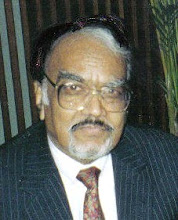
Amb(Rtd) K. Gajendra Singh; Lectures ,TV,Radio Programmes


                              AMBASSADOR (Retd) K.GAJENDRA SINGH


     TV ,RADIO & LECTURE  PROGRAMMES IN INDIA , UZBEKISTAN, ROMANIA & GERMANY


                                                           TV INTERVIEWS

1.Interviewed in March 1999 on 10PM News hour STAR TV, New Delhi program on Death of King Hussein and future of the Kingdom of Jordan


2.Interviewed in April 2000 on 10PM News hour STAR TV , New Delhi program on the Visit to India of Turkish PM Bulent Ecevit and role of Military in Turkey and Pakistan


3.Interviewed  on 29 April at  2000 hrs on  Sahara TV as Expert on Islamic Fundamentalism in Pakistan and elsewhere.
 
4.Comments for Sahara TV Parakh weekly Progm.30 December  2001 Chances of war with Pakistan (nil except by accident)


5.Telephone Interview by Polona Frelih Slovenian National Television on US franchised revolutions in Serbia, Georgia, Ukraine etc . 24 March, 2005

 
6. One hour long Panel discussion on Mumbai bombings and terrorism  at Romania's Realitate TV channel . 12 July, 2006.


7 .An hour and half long discussion on  Radio.Musika  Wisconsin , USA on US war on Iraq ,11 June, 2007 .


Interviews in Bucharest by BBC Hindi service


Interviewed regularly at Bucharest, over a dozen times ,since September  ,2003 by BBC Hindi service for their Radio news broadcasts on US war in Iraq , Middle East ,Turkey, Eurasia , Caucasus ,Central Asia, etc.


Programme year 2009


Delivered a lecture on Flouting of International Law and Failure of International Institutions along with George Galloway, British MP and Cynthia Mckinny, six times US Congresswoman ,at


The Kuala Lumpur International Conference to Criminalize War and War Crimes Tribunal –

28 October to 30 October, 2009.


                                 LECTURE  PROGRAMME  IN  INDIA , 2005-06


1. Timbuktu -- Nuclear proliferation by Pakistan's A.Q. Khan, to Iran , N. Korea etc

November 25 ,2005.  1330 hours at hotel Maurya Sheraton New Delhi-Mid Town Rotary Club


Lectures at the University of Kurukshetra


1.Chief Executive Officer, based on experience CMD, Indian drugs and pharmaceuticals Ltd., New Delhi and truth about globalisation

December 13.  1530 hrs at the Faculty of public administration.


2. Recent political developments in Central Asia and its linkages with India.

December 14 ,1130 hours. Faculty of political science. 


3. US led illegal war on Iraq's and decline of Western media.

December 15 1130 hours at Faculty of Law


4. Indo- US relations, India's vote against Iran and the Iraq war. 

1530 hours.  A talk with the Vice-Chancellor and the faculty of the Kurukshetra University.


Lectures in the University of Rohtak


1. US led illegal war on Iraq and the role of Western media. 

December 21 1130 hours , at the Faculty of law.


2. Recent changes In Central Asia and India's historical relations with the region.

December 22: 12:00 hrs.  at the faculty of Political Science.


Defence Institutes, India .


1.Iraq war and recent changes in Eurasia ,Lecture followed by Q &A`

1000hrs to 1130hrs ,4 January ,2006 at College of Military Engg ,Poone


2.Iraq war and recent changes in Eurasia ,Lecture followed by Q &A

1700 hrs to 1830 hrs`,5 January , 2006 Indian School of artillery , Deolali.


At New Delhi ;


3.Iraq war and its consequences ,13Hrs , 4 February , 2006

India International Centre , New Delhi


4.US led war on Iraq  , 1530 hrs , 8 February , 2006

  Foreign Service Inst , New Delhi


5. Recent Strategic moves in Central Asia and its impact on India .

1830 Hrs , 14 , February ,2006 at India Habitat Centre , New Delhi .


At Banaras Hindu University ;


1. Role of Chief Executive Officer –Globalisation and world situation.

1530 Hrs , 21 February , 2006 , Institute of Technology , BHU


2. Formulation and implementation of India's Foreign Policy ,

1030hrs, 22 February , 2006 , Academic Staff College , BHU


3. Iraq war and other questions and impact on India ,

1200hrs, 22 February , 2006. Academic Staff College , BHU


                                      LECTURE  PROGRAMME  IN  INDIA , 2004


1. Panel Discussion on Western Asia  --1600 hrs 3 March , 2004

             Iraqi diplomats under training at the Foreign Service Institute, New Delhi 


2. COMING OUT OF CHAKRAVHYU- US's Iraq Exit Policy

       24 March, 2004   1830 hrs Ahmedabad Management Association, Ahmedabad.


3. Brief history of Central Asia and present day problems--1600 hrs 2 April , 2004

             Foreign diplomats from 20 countries at Foreign Service Institute ; New Delhi 


                                  LECTURE  PROGRAMME  IN  INDIA , 2002


1.  Eastern foundations of  Western Civilisation.

                   8 January ,2002 .  1830 hours .India International Centre, New Delhi


2 .Influence of Turkic languages in the evolution and development of

           Hindustani languages.14 January, 1230 hrs .Aligarh Muslim University, Aligarh


3. India  and Central Asia post 12 January ,

                        15 January, 1230 hrs Aligarh Muslim University, Aligarh


4.  India and Central Asia.

                    4 February, 2002. 19:00 India Habitat Centre, New Delhi.


5. Informal session on Musharraf –Ataturk ,Jehad and Islam .

                    6 February .Institute of Defence and Strategic Analysis, New Delhi


6.  India and the New Great Game in Central Asia.

                    7 February, 2002.  1130 hours.  Indian Council for world affairs, New Delhi


                                           LECTURE  PROGRAM IN BERLIN


                                    Indian Cultural Centre , Berlin  1800 Hrs  4 July, 2001

 Cultural Relations between India and Central Asia and Influence of Buddhism on Islam


                                        LECTURE  PROGRAM IN ROMANIA


 1.  Forum Invest Romania , Brasov (Romania )   March , 1998 .

                               One of the  Key note Speakers at 2 day Conference on

                                     Investment in Infrastructure projects 

 2. Central Education Library , Bucharest ; 1600 hrs , 15 March , 2001.

                        Small is beautiful and Globalisation One of the Key note Speakers.


 3. Central Education Library , Bucharest ; 1600 hrs , 5  April , 2001.

                               India and Central Asia; Cultural Linkages and future Relations


                                       LECTURE TOUR OF UZBEKISTAN - NOV 1998

Tashkent

2nd November, 1998-1200 hrs;

                                 Lecture followed by Questions and Answers session at Tashkent State Institute of Oriental Studies on 'Indo-Turkic World; (a) Cultural similarities between India and Turkic countries ,specially in languages; (b Political developments in India and Turkey since 1950s- a brief comparative study

                                  1600hrs;

                                  Lecture followed by Questions and Answers session at India Culture Centre on "A millenium mark after half century of Independence –Indian polity after 1998 Elections. Attended by diplomats, professors and university students.

13th November,1998 1030hrs;

                                    Visit and discussions with the Director of Alberuni Institute.

Samarkand

3rd November ,1998-1430 hrs;

                                   Lecture followed by Questions and Answers session at Samarkand State University, Department of Oriental Studies on the Influence of Turkic languages in the development and evolution of Hindustani languages.

Bukhara

4th November, 1998- 1200 hrs;

                                     Lecture followed by Questions and Answers session at  Bukhara State University on 'Indo-Turkic World; (a) Cultural similarities between India and Turkic countries ,specially in languages;(b)Political developments in India and Turkey since 1950s- a brief comparative study . Attended by faculty members and students.

Andijan

6th November, 1998-1600 hrs

                          Dances , poetry recital etc by Hindi students of a local school followed by speech on similarities in Indian and Uzbek languages, music and culture etc

7th November,1998-930 hrs;             

                           Lecture followed by Questions and Answers session at  Babur University, Andijan on 'Indo-Turkic World; Cultural similarities between India and Turkic countries , specially in languages and Indian polity after 1998 Elections. Attended by professors and university students

            Most historical sites at Tashkent, Samarkand, Bukhara including sites of Bahaiuddin Naqsabandi's Tomb near  Bukhara and of Imam Bukhari near Samarkand and sites at Andijan (Babur's birthplace etc), Fergana and Kokand(Emir's Palace) were visited


                                      LECTURE  PROGRAMME  IN  INDIA , 2000


1.India International Centre , New Delhi; 1830 hrs ,27 January, 2000.

                         Military  in Governance ; Turkey and Pakistan


2. Foreign Service Institute , New Delhi  ; 1100 hrs 8 February, 2000

                                               Central Asia.

                                                Lecture for Foreign Diplomats


3. Rotary Club , Maurya Sheraton, New Delhi , 1430 hrs  , 25  Feb, 2000 

                       Military  in Governance ; Turkey and Pakistan  and Taliban


4. Centre for Middle Eastern Studies J. Nehru University, New Delhi.11 hrs 3 March, 2000

                                          Kurdish Problem  in Turkey


                          LECTURE  PROGRAMME  IN  INDIA , FEB-APRIL 1999


1.India International Centre , New Delhi; 1830 hrs ,18th February, 1999.

                           New Economic Community for Aryan and Turkic Countries

                                     Lecture followed by Questions and answers

2. Foreign Service Institute , New Delhi  ; 1500 hrs 24  February, 1999

                          Common Market for Central and South Asia.

                                        Lecture followed by Questions and Answers

 3. Rotary Club , Maurya Sheraton, New Delhi , 1400 hrs  , 5  March, 1999 

                              Linkages between Central Asia and India.

                         Lecture followed by Questions and Answers

4.  Institute of Defence and Strategic Analysis , New Delhi,10.00 hrs  10 March 1999, 

                 Military's Role  in Politics, Comparative Study of Turkey and Pakistan

                         Seminar  followed by Questions and Answers

5. Delhi Business School , New Delhi  12/13 March,1999

                               Capitalism in a state of Flux                     

                   Seminar on Strategic Leadership in the Times of flux

6.  Centre for Russian and Central Asian Studies , Jawaharlal Nehru University, New Delhi.

              Seminar on Energy Resources and  Geo-Politics of Central Asia and Caucasus.

                   Paper and discussions on Energy and other resources of the region  and

                                 A Common market with South Asia ; 23March,1999

7. Institute of Rail Transport ,Railway Board , New Delhi,  5 April , 1999

                   Energy Resources around the Caspian Basin and Rail Transport  

                              Lecture followed by Questions and Answer     

Wednesday, September 7, 2011

Life and Times of Arafat; Mission Incomplete


Life and Times of Arafat; Mission Incomplete (B) by K. Gajendra Singh 


Yasser Arafat, also known as Abu Ammar , who died on 11 November, 2004 , seven years ago , "in exile " in a Paris hospital, away from his Israeli battered Ramallah residence in Palestine, would always be remembered for creating the Palestine nation and its identity against insurmountable odds. But his mission to achieve an independent and a sovereign state remained incomplete. A fact not much highlighted even in these days of growing catastrophic religious divide between Judaism and Christianity on side and Islam on the other, lies in his keeping the Palestinian liberation movement secular in spite of many pressures. He was very popular in India and was always a welcome visitor. 


Arafat, born in Cairo 75 years ago and at whose funeral at the military airport Al Maza, presidents, kings and other world leaders paid their last respects on 12 November, was the perfect example of " One man's terrorist is another man's freedom fighter."   Others so called terrorists who fought for the freedom of their nations were Benjamin Begin, Yitzhak Shamir, Jomo Kenyatta, Bal Gangadhar Tilak and Subhash Chandra Bose  (all by the British), Ho Chi Minh, Houari Boumidienne, Shiekh Mujib-ur-Rehman, Nelson Mandela among others. 


For half a millennia under the Ottomans , Palestine, Lebanon and Jordan were all part of Greater Syria with ill-defined borders based on tribal grazing rights than cartographic delimitation. It is curious that Israel, USA and some others, while accepting UN division of Palestine recognized Israel but not the state of Palestine. Israelis and Emir Abdullah of Jordan established contacts to divide Palestine and with the latter annexing areas to his Kingdom after the 1948 Arab Israeli war. But Abdullah did that but paid the price. He was assassinated in 1951 by a Palestinian while coming out of the Al Aqsa mosque in Jerusalem. Egypt took over Gaza. Palestinians were just Arabs and their homeland was up for grabs. Yes, the Palestinians have been denied citizenship rights in their own country and continue to live in refugee camps in other countries since over half a century. 


Arafat died with his dream of independent Palestine unfulfilled, but even when sick, he refused to bow and accept Bantustans for a Palestinian state. Incarceration of Arafat in a few bombed out rooms in Ramallah, the land of his ancestors, with US corporate media maligning him would remain a blot against human rights and dignity. It is a dark tribute to the Jewish hold over US politics that both the candidates in the recent presidential polls dared not say a word against Sharon's policies. Verily proving the Israeli stranglehold over US electoral system and the bankruptcy of US policy in the Middle East. 

Blame on Arafat's refusal to accept a dysfunctional Palestine with little sovereignty is a result of the spin of so called Western media in the words of John Pilger and Robert Fisk. A lack of solution lies squarely with the Maximalist Israeli rulers, mostly former military generals .The claims for non- acceptance of Clinton Camp David and Taaba talks are similar to the corporate western propaganda claims that Iraq was somehow responsible for 11 September and Iraq and Al Qaida were interlinked. Western propaganda's bark against those "not with us " is worse than unilateral wars in spite of UN and world opposition.


"Rejoice not when thy enemy falleth," the Old Testament

Israeli Labour leader Simon Peres was considerate after Arafat's death and said ," The Palestinians see in Yasser Arafat the father of their nation. Like a father, he did much for his children, but he was also often overprotective of them. Arafat is a difficult figure with whom to come to terms. He did more than any other leader to forge a unique and separate Palestinian identity. He was the voice and symbol of the Palestinian cause. His tireless efforts brought the Palestinian cause to the forefront of the international agenda and kept it there for four decades." Peres also called on his countrymen to 'let bygones be bygones and let openings be openings'.


But the Guardian reported that while after the death of Yitzhak Rabin, condolence and sympathy was offered to the Israelis by many Palestinians; even by some who had lost sons, husbands and brothers to Rabin's "iron fist" policies; to "break the hands and legs of every stone-thrower" during the first intifada. Leaders of the Palestinian Authority who were interviewed by the Israeli media, talked of their grief. Arafat got special permission to visit the bereaved widow, Lea Rabin, in Tel Aviv, and sat with her, tears in his eyes. But the Israeli government announced, as soon as a dying Arafat was flown to Paris, that he would not be allowed to be buried in Jerusalem, where Arafat claimed he was born.


Inbal Gavrieli, a member of the Knesset, shouted at Ahmad Tibi, an Arab member of the Knesset, that Arafat was "a dog". Yosef Lapid, one of Mr Sharon's ministers, said in an interview with Israeli Radio. "I hated him for the deaths of Israelis ... I hated him for not allowing the peace process ... to move forward." An Israeli official, critical of Mr Lapid's intervention, said: "Arafat was a monster but it is not right to say such things on the day that the Palestinians are preparing to bury him." But many Israelis followed suit with insults and celebrations at Arafat's death. This hatred and self-righteousness is the harvest of Ariel Sharon's poisonous policies.


Arafat: early life and influences

Born in 1929 at Cairo and named Muhammad Abdul Raouf Arafat al-Qudwa al-Husseini, the sixth child of a Palestinian middle class merchant, Arafat was sent at the tender age of 4 years to live in a house by the Wailing Wall and the al-Aqsa mosque in Jerusalem. His exposure to the struggle between marauding Jewish settlers and a disorganized and aggrieved Arab peasantry left an indelible mark on the little boy. He was a witness to the Zionists' passionate struggle to take over the traditionally Muslim-administered Wall and other disputed holy places in an atmosphere charged with emotions .He also witnessed anguished debates about the country's future, and the beginnings of the "great rebellion", and armed uprising of a desperate and dispossessed poor people.


The other child hood influence was the female domination at home, which made him rebellious and independent .His marriage when 62 years to a 40 year younger Suha Tawil was a hangover of that trait, which created much embarrassment all around. But such marital alliances were not uncommon and were socially accepted in the region. But now it caused an acrimonious debate between Suha and the PLO leadership over Arafat's health and then his will and money.


Arafat returned to Cairo in 1937 and thus escaped the Arab catastrophe in Palestine, when the ill prepared Arab Armies led by corrupt leaders were defeated in 1948 by the new state of Israel, adding to the humiliation already felt by the Arabs under the British colonial rule. After the war ,the Jews imposed their rule on 78% of Palestine. Arafat could empathise with the terrors and humiliation of mass flight and exile of his people, the Palestinians from their homes. Over 700,000 Palestinians were forced to flee. But Arafat had became a key, intrepid figure in smuggling arms from Egypt into Palestine. However, when "an Egyptian officer came to my group and demanded that we hand over our weapons ... we protested ... but it was no good ... in that moment I knew we had been betrayed by these regimes." He was convinced that if Palestinians relied on others, they would never recover their homeland. 


While doing civil engineering degree he took over the stagnant Cairo-based League Of Palestinian Students with some help from Moslem Brotherhood, which was then organizing and asserting itself. He was tireless, wily, domineering, but he had another vital trait which makes for charisma; of showmanship and the theatrical gesture. In 1955 at a congress in Prague, he suddenly donned the keffiyeh, the traditional checkered headdress, which, while hiding his entirely baldpate, also became his emblem. He referred to himself, perhaps half-jokingly, as "Mr Palestine", which he ultimately did become. 


Arafat then went to Kuwait in 1958, and could have become a multi-millionaire as a building contractor as many others have. But his stay in Cairo had left a lasting impact, where Col Gamal Nasser, had begun his revolution in the Arab world .Nasser stood up to the British colonial power, removed its military bases and nationalized the Suez Canal. The ignominious failure of the British –French –Israeli aggression in 1956 made him a hero not only in the Arab world but in Asia and Africa, then fighting for independence from colonial rule. Nasser openly supported freedom movements from all over the world, with headquarters in Cairo. The author, posted as a young diplomat there in early 1960s savoured that revolutionary air, and later in Algiers, where he met with Che Guevara. 


Arafat's business experience in handling money and men was later useful as the leader of his people, when he disposed of billions of dollars and made canny use of it as an instrument of policy and patronage. But personally he led a most Spartan private life, his only failing being love of honey .He reportedly had liaisons with women, but he could claim that he was married to his Revolution until in 1992 he took as wife Suha, from a wealthy Christian family of Jerusalem.


Helped by funds and his zeal, Arafat took the first clandestine steps that led to his emergence as one of the household names of the age: an ideal, however flawed, of all the aspirations to most Palestinians; of all the evil and the would-be destructor of their state, to most Israelis. He also took the name of "Abu Amar" .If Arab regimes exploited him and the Palestine cause, he became a sacred, exasperating, and unavoidable obligation to most Arab regimes. During decades of his leadership he transformed himself from a "terrorist" to politician, even statesman, in the eyes of the world. If the Palestine cause and presence in the Arab world proved a cement in uniting the Arabs, he threatened that it could also act as dynamite if the cause was ignored.


To begin with, in 1959 with his close friend Abu Jihad in Kuwait, he edited the magazine "Our Palestine " .It highlighted the Palestinian refugees' plight and the inaction of Arab regimes, and espoused the ideal of the "Return to Palestine ", with a full-scale "popular liberation war" as the only means of achieving it. The two established the Fatah guerrilla organisation's first five-man underground cell. On 1 January 1965, ill-trained, pitifully short of both weapons and funds, the Fatah Feyadeen (those who sacrifice themselves), mounted their first trans-frontier raid into the "Zionist gangster-state".

But in political terms Arafat's guerrillas were a much greater challenge to the Arab regimes than they were to the Israelis. In theory, the regimes too were preparing to liberate Palestine - but mostly by talk, by conventional military means in their own good time. The early Arafat exploits, were mere pinpricks that gave Israel another reason to fight a war that would end with it gaining the remaining 22% of Palestine; East Jerusalem, the West Bank and Gaza - after the shattering Arab defeat in the 1967 war. But the guerrillas' power grew steadily in Jordan, to which 380,000 Palestinians had fled after Israel occupied the West Bank in 1967, joining others who had arrived earlier in 1948. 


Arafat's major daring feat remains the battle of Karameh, a small Jordanian town in the valley, when on March 21 1968, and an ill-armed band of guerrillas inflicted heavy casualties on a vastly superior force of Israeli invaders. Having been humiliated in 1948 and 1967, the Fedayeen became the Arab world's darlings with volunteers flocking in to join it. Arafat became chairman of the executive committee and commander in chief of the Palestine Liberation Organization in 1969. The Palestinian National Council, the PLO's parliamentary body, adopted Al Fatah's goal: "creating a democratic society in Palestine where Muslims, Christians and Jews would live together in complete equality." PLO was established in 1964 by Egypt's President Nasser. 


But Al Fatah became a state within the Jordanian state. When swaggering guerillas behaved almost like masters of Jordan, in which Palestinians form 55% of the population, it became intolerable for the Hashemite King Hussein. The hijacking of 3 civilian planes by guerillas by a faction outside PLO control and their destruction in Jordan's deserts was the last straw. In September 1970 (named Black September events by PLO ), King Hussein used his tribal Bedouin soldiers against PLO guerillas to drive them out of his Kingdom. In the planning of the operations Brigadier Zia-ul Haq then on deputation played a key role. Zia's boss in Pakistan received a message that " a kingdom has been saved". There were some Palestinian officers who were involved in many attempts to overthrow King Hussein, so Jordan's armed forces and security services have few Palestinians now. Open provocative declarations by senior Israeli leaders that Jordan is Palestine did not help matters. 


PLO and its guerillas then shifted to Lebanon, where they fitted not easily into that country's ethnic and ideological divisions. Arafat built himself a stronger power base. After the 1973 Arab-Israeli war when a US military Hardware Bridge made Israelis roll back Egyptians' initial gains, began the American peace-making. Arafat then began moving away from "revolution till victory" towards a "doctrine of stages". He sought what immediate gains could be made from a political settlement without renouncing the historical right to all of Palestine.


After the Arabs had accepted the PLO as "the sole legitimate spokesman of the Palestinian people" in 1974, King Hussein, his historic Arab rival, also did the same. Soon Arafat addressed the United Nations general assembly at its first debate on the "Palestine question" since 1952, thus becoming the first leader of a "national liberation movement" to be so honoured. That diplomatic triumph was followed by a dreary period of diplomatic military-strategic reverses, inflicted by Arabs and the Israelis. He sided with the Muslim-leftists in the Lebanese civil war. But then Syria's President Assad sent in his army to help the right-wing Christian Phalangists. The civil war's first phase ended in 1976 with the siege and fall of the Palestinian refugee camp of Tal al-Zaatar. But at an emergency summit, Saudi Arabia and Kuwait rescued Arafat from Syrians.


In 1982 the Israelis with Ariel Sharon as defense minister invaded Lebanon and hunted Arafat using F-15s as flying assassination squads, killing 200 people when a laser-guided vacuum bomb, flattened an apartment block Arafat had left moments before. Under US pressure and assurance, Arafat and his fighters were exiled to Tunisia which became his headquarters. And PLO lost its Lebanese politico-military power base across Israel and occupied West Bank.


Then under the 'benign' gaze of Ariel Sharon the Phalangists carried a pogrom against defenseless Palestinian refugees in the camps of Sabra and Shatila. When Arafat slipped back 15 months later into the Syrian-controlled part of Lebanon, where Assad had helped foment a rebellion against him in the ranks of what was left of the Fatah guerrillas, he was rescued by a European-arranged safe passage from Tripoli, being bombarded by Israel from the sea and besieged by Syria. "Such is the bizarre ending of a movement that, for all its daring, never found a political vision," prematurely declared the New York Times.


Far away in Tunis Arafat almost became irrelevant. But the Israelis never gave up on Arafat and his comrades .In 1985 Israeli F-15s killed 73 people at his seafront Tunis headquarters. Arafat was out "jogging" at the time. At the 1987 summit, to his fury, Arab leaders for the first time put something other than Palestine - the Iraq-Iran war - at the top of their agenda.


Intifada; a grass roots uprising

But in November 1987, when the Israelis thought they had created a South Africa style regime in the Occupied Territories and exploited cheap Palestine labour for its economy, the young Palestinians, fed up with daily humiliations and oppression rose up against the occupying Israeli forces in a spontaneous, non-armed intifada. The Palestinians had fought from West bank, part of Hashemite Kingdom up to 1967, then from Jordan up to 1970 and then from Lebanon up to 1982. Now with PLO far away in Tunis, the grass roots Palestinians refused to accept slavery and worse. It is this leadership, which will now decide the future of Palestine.


It was not difficult for Arafat to take over Intifada as he still embodied the idea of rebellion and Palestinian aspirations .It was a new asset, stronger than the long, costly "armed struggle". The stones that youngsters hurled at Israeli soldiers were more potent than Kalashnikovs and the harsh Israeli response telecast around the world on TV screens aroused passions and anger even among American people .In order to keep the Intifada non-violent and united, Jordan TV used to telecast Attenborough's film Gandhi, which was seen by Palestinians, Jordanians and Israelis alike.


Arafat accepts 'two states solution

Then in a bold political move in 1988, Arafat solemnly proclaimed recognition to the "two-state" solution, which meant that the Palestinians gave up 78% of their original homeland. He recognized Israel's right to exist. Then began a long sought US-PLO dialogue; called the Palestinians' "passport to the world". But it turned out to be a historic mirage, a failed gamble. For Israel, he remained the unregenerate terrorist; and Washington was too beholden to Israel.


Only President Saddam Hussein supported the Palestinian cause fully, so Arafat aligned himself to a militarily powerful and increasingly militant Iraq. And when Saddam Hussein invaded Kuwait, he backed him, a miscalculation in American eyes. But then he had to respond to the feelings of the Palestinians. Even King Hussein, so reliant on the west, had to listen to the majority of his Palestinian origin population .He did not join the US led coalition against Saddam Hussein, which almost all Arab and Muslim countries did, for money, out of rivalry and some other consideration .So much for Arab solidarity .It was Saddam Hussein who had saved the Gulf Kingdoms and Sheikhdoms from the fury of the Iranian Shiite revolution after 1979. So much for gratitude!


But USA had to promise its Arab, Muslim and other Allies in 1991 war that it would make a serious effort to resolve the Arab-Israel problem, which had been highlighted by Saddam Hussein. So in late 1991 the Madrid peace conference was organized . Arafat persuaded the Palestinians to go to the conference. For the first time Israel and its Arab neighbours talked to each other and at each other across a table. But the Arabs did so at the cost of historic concessions. The Israelis went through the motins of the exercise. They chose which Palestinians they would talk to. There was no place for PLO members, let alone Arafat, in the Palestinian delegation. They also largely set the agenda; the Americans backed their refusal to discuss anything suggesting the Palestinians' right to "self-determination". Israelis saw that Madrid got nowhere.


But an inveterate traveler, Arafat kept up his endlessly airborne routine. In 1992, his aircraft crash-landed during a Libyan sandstorm. The crew sacrificed themselves to save him – testimony to the loyalty he inspired. His escape was described as a "heavenly referendum" by many Palestinians. The relief and joy was genuine enough all around the world. It was in Tunis that at 62, and to the disapproving surprise of his people, Arafat took a 28-year-old wife, Suha Tawil.


1993 Oslo Accords

Soon Arafat began the secret talks that astonished the world and from which the Oslo agreement emerged. Some of his officials unkindly whispered that the crash, the shock to his faculties already going awry, had pushed him into this last extremity of "moderation". Others accused him of individualism, vanity, deviousness, authoritarianism and a mystical belief in his infallibility. What he wanted almost at any price was to internalize the Madrid conference and face the rise of the "insider" leadership, and the appeal of Hamas fundamentalists, which all threatened to bypass him. Israel which had helped create Hamas took full advantage.


The 1993 Oslo Accords were along the lines of the Labour Party's Alon plan which called for the annexation of 35-40 percent of the Occupied Territories, and either Jordanian rule or some form of autonomy for the remaining land to which the Palestinian population would be assigned. In the past, the Palestinians had always opposed such plans, which would take away too much of their land. Perhaps without realizing its ramifications, Arafat had agreed. Only an apparent "smashing victory" could have kept Arafat in focus and power. So behind the back of the Palestinian negotiating team headed by Haider Abd al-Shafi, Arafat accepted an agreement that left all Israeli settlements intact, even in the Gaza Strip, where 6,000 Israeli settlers occupy one-third of the land, while a million Palestinians are crowded in the rest.  


On September 13 1993 in a signing ceremony on the White House lawn, overseen by Bill Clinton, the 64-year-old former "terrorist" shook hands with Yitzhak Rabin, Israeli Prime Minister and was accepted as a statesman. For this he shared the 1994 Nobel Peace Prize with Rabin and Peres. But the price was immense. He claimed that the accord would inexorably lead to Israel's withdrawal from all the occupied territories; the Palestinians were on the road to statehood with its capital in East Jerusalem. Nine months later he returned "home" to Palestine. But the self-governing areas were the merest fragments, in Jericho and Gaza, not merely of original 1948 Palestine, but of the post-1967, 22% of it, on which he was to build his state.


According to Labour leader Simon Peres, Arafat once bitterly told him after the Oslo accords "Just see what you did to me: From a popular figure in the eyes of my people, you have turned me into a controversial personality in the eyes of the Palestinians and the whole of the Arab world."


Oslo had provided for a series of "interim" agreements leading to "final-status" talks. An Israeli commentator said of the first of them: "when one looks through all the lofty phraseology, all the deliberate disinformation, the hundreds of pettifogging sections, sub-sections, appendices and protocols, one clearly recognizes that the Israeli victory was absolute and Palestine defeat abject." For 6 years nothing happened except what Israel wanted, with the balance of power now more overwhelmingly in Israel's favour than ever. The "interim" agreements which should have advanced Arafat 's conception of "final status" only advanced the Israeli interests.


A revolutionary, Arafat was not good at building democracy .PLA was no different from other Arab regimes he denounced as corrupt. More people went into Palestinian jails than in Israeli ones. His so-called economic "advisers" shaped a nepotistic edifice of monopoly; racketeering and naked extortion which enriched them as it further impoverished the people. Funds meant for the PLO were distributed among close associates (some of them look quite well fed and content ) In 1999, 20 leading citizens denounced not just high officials and their business cronies, but even the "president", who had "opened the doors to the opportunists to spread their rottenness through the Palestinian street". There was open opposition to his dictatorial one-man rule and open corruption. This is a common problem with all revolutionary organizations when they acquire levers of power.


By 1997, three years after Arafat's triumphal return to Gaza, the Palestinian economy was stagnant and per-capita annual income in Gaza had declined by $100, to $1,050. Refugee camps were mired in squalor, a situation that did not improve with time. According to United Nations figures, 50 percent of the 2.2 million Palestinians on the West Bank were living below the poverty line in 2004, compared with 22 percent in 2001; the figure is now 68 percent in teeming Gaza, with its 1.3 million people.


Israel's Phantom offer

Israeli PM Ehud Barak then conceived the idea of telescoping the "interim" stages, which had fallen behind schedule as well as the "final status" which had been left to the end precisely because they were so intractable - into one climactic conclusion to end the 100-year conflict. US President Bill Clinton fell in line. Most US presidents in their second term want to write their names in history .In July 2000, at Clinton's Camp David retreat, Barak laid before Arafat his take-it-or-leave-it "historic compromise." In return for his solemnly dropping all further claims, Israel would agree to the emergence of a Palestine state, covering even less than the 22% of the original homeland to which he was confined to without real sovereignty or East Jerusalem as its capital, or the return of refugees. And the illegal settlements would remain.


The summit collapsed as Arafat stood firm, evidently deciding that to cede historic goals would be ruinous. Even he had no Palestinian, Arab or Islamic mandate for ceding Jerusalem's sovereignty or abandoning the rights of four million refugees. From this collapse grew the second intifada, essentially a popular revolt, first against the Israeli occupation and the realisation that the Oslo peace process would never bring it to an end and, potentially, against Arafat and the discredited Palestine Authority. It took on its own life and momentum with Arafat only in nominal control. Its true leaders were men of a younger generation such as Marwan Barghouti.


The intifada's other activists were the fundamentalists of Hamas and Islamic jihad. They did not oppose Arafat, nor did they owe any allegiance to him. Their suicide bombers inside Israel proper harked to the much larger meaning which the intifada carried for them: "complete liberation." The death toll mounted beneath the overwhelmingly superior Israeli firepower, from small-scale attrition of sniper and small arms fire, through systematic assassinations, to tanks, helicopter gunships and F-16s unleashed on targets in densely populated civilian neighbourhoods. This has only increased poverty, hatred and despair and the willing bomber volunteers. Most Israelis saw the intifada as an existential threat and they all blamed Arafat. For the peace-seeking Israeli left he had betrayed them with a resort to violence just when a historic breakthrough seemed possible .The right, felt he was the unregenerate killer he always was. This led, in February 2001, to the rise of Ariel Sharon, tainted from by the Sabra and Shatila massacres, to head Israel's most extreme and bellicose government in history.


Like Saddam's 1990 invasion of Kuwait, the events of September 11, 2001 were a further setback for the Palestinians. This time Arafat was determined to put himself on the US side by supporting  America's "war on terror". But his attempts to end the intifada, arresting militants who broke the ceasefire and protested against the US led assault on Afghanistan had little effect. George W. Bush, the most pro-Israeli president ever, did little more than look on as Sharon re-conquered much of the West Bank, wreaked havoc on the infrastructure of the PA, and subjected Arafat himself to a humiliating siege in his headquarters in Ramallah, his office reduced to mounds of rubble.

In the summer of 2002, Bush pronounced Arafat unfit to rule and "irrelevant", as he had imperiously declared UN in early 2003. In Sharon's world, along with Saddam Hussein, Arafat was ready for  "regime changes" which Bush now envisaged across much of the Middle East. In 2003, Bush secured the appointment of a docile prime minister, Mahmud Abbas aka Abu Mazin, hoping he would do what Arafat would not - to war against the Islamic militants without any assurance of worthwhile concessions. But Arafat, with his continued grip on the levers of power, drove the hapless and unpopular Abu Mazen to despair and resignation.


With the total breakdown of the ceasefire and the "road map" in tatters, and a resumption of the suicide bombings, the Israeli government announced its intention to "remove" Arafat, this "absolute obstacle to any attempt at reconciliation between Palestinians and Israelis." As time went by, Israel extended the "Arab-free" areas by new settlements and connecting roads etc in the Occupied Territories to about 50 percent of their land. Labor circles had talked about the "Alon Plus" plan, namely, even more land to Israel.

At the time of Oslo Accords, the majority of Israelis were tired of war. They thought fights over land and water resources were over. Haunted by the memory of the Holocaust, most Israelis believed that the 1948 War of Independence, with its horrible consequences for the Palestinians, was necessary to establish a state for the Jews. But now both sides with their states could live normally and peacefully. Most people on both the sides believed that what they were witnessing were just "interim agreements" and that eventually the occupation would somehow end, and the settlements would be dismantled. Two-thirds of Jewish Israelis supported the Oslo agreements in the polls. It was obvious there was no stomach for any new wars over land and water.

But the ideology of war over land never died in the Israeli army, or in the circles of politically influential generals, whose careers moved from the military to the government. From the start of the Oslo process, the Maximalists objected to giving even that much land and rights to the Palestinians. This was most visible in military circles, whose most vocal spokesman was then chief of staff Ehud Barak, who objected to the Oslo agreements from the start. Another beacon of opposition was, of course, Ariel Sharon. In 1999, the army got back to power through the politicized generals - first Barak, and then Sharon.

So the Maximalist generals-turned-rulers decided to correct what they viewed as the grave mistakes of Oslo. In their eyes, Sharon's alternative of fighting the Palestinians to the bitter end and imposing new regional order may have failed in Lebanon in 1982 because of the weakness of the soft Israeli society, but now, given the new war philosophy established through US military operations in Iraq, and earlier in Kosovo and Afghanistan, the political generals believed that with Israel's massive air superiority, it might still be possible to execute that vision.


However, in order to get there, it was first necessary to convince the Israeli society that, in fact, the Palestinians were not willing to live in peace, and were still threatening Israel's very existence. Sharon alone could not have possibly achieved that, but Barak did succeed with his generous offer- fraud. There was no real offer on the table. It was a media-assisted creation like the belief created in the US population that Iraqis were responsible for September 11.

"The Israeli press is as obedient as elsewhere, and it recycles faithfully the military and governmental messages. But part of the reason it is more revealing is its lack of inhibition. Things that would look outrageous in the world are considered natural daily routine," writes Israeli Prof Tanya Reinhart. Earlier the world was made to believe that Israel was willing to withdraw even from the occupied Syrian Golan Heights. In the polls, 60 percent of the Israelis, hoping for peace, had enthusiastically supported dismantling all settlements in the Golan Heights. But the end of this round of peace negotiations ended in the same way as with Palestinians. It was made out that Syrian leader Hafiz al-Assad did not comprehend and had let the opportunity slip. But it was not true. Media then convinced the Israelis that it was the rejectionist Assad who was unwilling to get his territories back and make peace with Israel.


Second Intifada

Why did Barak permit Sharon a provocative visit to Temple Mount/Haram to ignite the boiling frustrations accumulated in the Palestinian society? The massive security forces used rubber bullets against unarmed demonstrators. When the visit triggered more demonstrations the next day, Barak escalated the shootings and ordered Israeli forces and tanks into densely populated Palestinian areas. By all indications, the escalation of Palestinian protest into armed clashes could have been prevented had the Israeli response been more restrained. Even in the face of armed resistance, Israel's reaction was grossly out of proportion, as stated by the General Assembly of the UN, which condemned Israel's "excessive use of force" on October 26, 2000. The second intifada has so far left more than 900 Israelis and almost 3,000 Palestinians dead. And Israel, less secure.


The first Palestinian terrorist attack on Israeli civilians inside Israel took place on November 2, 2000, a month after Israel used its full military machine including helicopters, tanks and missiles against Palestinians. So it was not defense against terrorism as claimed by Israel. It would appear that another plan to destroy the Palestinian infrastructure and to discredit Arafat, i.e. that he had never given up the "option of violence", was ready in October 2000 and are contained in a manuscript known as the "White Book".

Professor Tanya Reinhart suggests in her book Israel/Palestine that despite the horrors of the past years, there was still another alternative. "Israel should withdraw immediately from the territories occupied in 1967. The bulk of Israeli settlers (150,000 of them) are concentrated in the big settlement blocks in the center of the West Bank. These areas cannot be evacuated overnight. But the rest of the land (about 90-96 percent of the West Bank and the whole of the Gaza Strip) can be evacuated immediately. Many of the residents of the isolated Israeli settlements that are scattered in these areas are speaking openly in the Israeli media about their wish to leave. It is only necessary to offer them reasonable compensation for their property. The rest ... are a negligible minority that will have to accept the will of the majority." 

But this not likely to happen. Instead a Berlin wall, in spite of a ruling against it by the International Court in The Hague, continues to be built to claim more Palestinian territory. The United Nations concluded that the barriers and enclosures had cut off 11.5 percent of the West Bank, excluding East Jerusalem. Israel has confiscated 24 per cent of the area of the West Bank and Gaza and 89 per cent of East Jerusalem for settlements, highways, military installations, etc. It controls 80 per cent of the water resources of the occupied territories and also appropriates a large quantity, equal to one-third of its consumption, from the Jordan River. Fourth-fifths of the water from the West Bank's sole underground aquifer goes to Israel.


The greatest, and most immediate, challenge is offered by Ariel Sharon's plan to wind up all the 21 settlements in Gaza and four others in the West Bank, beginning in 2005.The "Disengagement Plan" is opposed by a large number of Palestinians because it is part of Israel's comprehensive strategy to continue its occupation under more favourable conditions while freezing the peace process. And as Sharon's senior adviser D. Weisglass openly says: "When you freeze the peace process, you prevent the establishment of a Palestinian state." Sharon wants to bypass any political process and reconfigure the entire territory of Palestine and make a genuine two-state solution virtually impossible. The strategy to change the facts on the ground is being implemented thoroughly.


Conclusion

There appears little chance of peace or accord in Palestine, in spite of some recent polite talk by Bush to lift Tony Blair's spirits in Washington a few days ago. Bush , whose re-election was on 'more of the same " will look around for a Hamid Karzai if not an Iyad Allawi among Palestinians. Both Abu Mazen and Prime Minister Ahmed Qureia command little support among Palestinians. According to a recent survey by An-Najah university in Nablus, less than 43% of Palestinians have confidence in Abbas, while Qureia, commands even less support, with just 28 believing he is capable of managing the PA's affairs. From the outset, these "outsiders" antagonised the Israeli-occupied "insiders". Arafat parceled out office among his inner circle of cronies - old, sycophantic, inefficient, corrupt - who depended entirely on him for their survival, as he did on them for the preservation of his autocratic style.


According to Yahia Said, of the London School of Economics, PLA was a 'rudderless' Authority with  'pervasive decay' for which Arafat was 'directly responsible'. 'Arafat elevated symbolism to a full-time job,' said Said. 'We are seeing the end of a generation of politicians who were seen as almost divine.' Yes, Arafat's death signals the end of the era of major historical figures - such as Saddam Hussein, Hafez Assad of Syria and Anwar Saadat, Hosni Mubarak of Egypt - who emerged from the various nationalist, socialist-influenced, post-colonial liberation movements in the Middle East in the second half of the twentieth century.


Their doctrines are now being replaced; it appears by Islamic radical ideologies.  Recent polls show that Palestinians' support for Islamic groups went up from 17 per cent to 35 per cent in last four years while support for Arafat's Fatah movement, slipped from 37 per cent to 28 per cent. The main Islamist party, Hamas, will certainly be a key player in any election - either by actively endorsing a candidate or because the organisation can make or break any incumbent by unleashing suicide attacks on Israeli targets. If local elections are held, Hamas is expected to win a number of municipalities, especially in Gaza. They have taken over the dominant, heroic role in the national struggle. As for governance, they have demonstrated their potential in their welfare services, with dedication and competence. It was this kind of service and organization in Turkey, which brought to power its Justice and Development party, with its Islamist roots.


As for PLO , public supports the former head of Fatah's military wing on the West Bank, Marwan Barghouti, but he is in an Israeli prison serving five consecutive life terms for organising attacks on soldiers and settlers in the occupied territories. After the departure of the Symbol, time is now for home grown leadership from the two Intifadas. But with the father of Palestinian identity and nationalism gone, things are likely to get worse than better.


K Gajendra Singh, served as Indian Ambassador to Turkey and Azerbaijan in 1992-96. Prior to that, he served as ambassador to Jordan (during the 1990-91 Gulf war), Romania and Senegal.  He is currently chairman of the Foundation for Indo-Turkic Studies. 


Monday, September 5, 2011

Would UN General Assembly Vote for an Independent Palestine

Would UN General Assembly Vote for an Independent Palestine (A)

The Life and Times of Arafat ; Mission Incomplete (B)


Since the Fall of the Berlin Wall ,there are enough existential and serious problems for regimes and states in the Arab and Muslim world ,from Morocco to Saudi Arabia, and beyond , greedy , ruthless White Christian Crusaders pursuing mostly illegal policy of destruction and loot of  sovereign states like Libya ,Iraq etc .There is relentless pressure on Assad regime in Syria, but the next hot item on the Middle East agenda is going to be the vote on Palestine Independence in United Nations General Assembly (UNGA) in September, 2011. 

According to Israel’s Haaretz the UNGA is expected to okay an independent Palestinian state by a huge majority. “The wording of the draft, crafted in recent days by the Fatah leadership, is designed to enable even “problematic” countries such as Germany, Italy, the Netherlands and the Czech Republic to climb on board, or at least abstain. This version will make it difficult for the United States and the Marshall Islands, and even for Israel, to explain their votes against the proposal. Instead of recognizing Palestine within the 1967 borders, it will state that the permanent borders will be determined in negotiations with Israel based on the borders of June 4, 1967. This approach made it possible to enlist the support of leading moderates in Hamas, who claim that recognition of the 1967 borders before the signing of a final-status deal means waiving the claim to the right of return.”

 Given the Israeli government’s intransigence, the Palestinian leadership and its advisers feel that the option of settling the conflict via bilateral negotiations − the path pursued by the Palestinian leadership for 20 years − is no longer viable. Most of them “ support the option of an independent Palestinian state within the 1967 borders, with Jerusalem as its capital and a fair arrangement that will fulfill the right of return and the compensation of the Palestinian refugees. -It rejects the possibility of continuing the status quo, maintaining that the endless negotiations provide cover for expanding the settlements and consolidating the occupation. It will also erase from the agenda the option of a Palestinian state with temporary borders and limited sovereignty, under effective Israeli control.” 

The Palestinian Authority leadership also examined other options like nonviolent resistance as in Egypt and Tunisia – or dismantling itself and restoring responsibility for the West Bank’s inhabitants to Israel or towards a model of a bi-national state or democratic state without distinction between Israel and Palestinian citizens. Even the possibility is a confederation between Jordan and the Palestinian state was examined. The last attempt was made by late Yasser Arafat after the failure of the Camp David talks in 2000. Arafat travelled to many capitals, to seek support for such a declaration. But most countries advised Arafat to continue with the peace negotiations rather than pursue a unilateral path. 

This time the situation is different. There is little hope for real negotiations. The Arab revolts against pro-US leaders have created a favourable environment. Cairo , which was under US influence followed a pro-Israel policy .Now the transition government in Egypt has already called upon the United States to support Palestinian independence. Popular uprisings elsewhere will influence the governments in the Arab world to be more sensitive on the Palestinian issue. There is little doubt of deep the support in the Arab and Muslim Street for the Palestinians .


As regards Turkey, Ankara’s relations with Israel have plummeted to very low depth with nine Turks killed by Israeli commandos on Mavi Marmara carrying aid for embattled Gaza citizens . Ankara recently withdrew its ambassador from Tel Aviv and asked Israel to apologise .Since many years Ankara has regularly criticized Israel and its policies .When Israel  was reported to be interfering in north Iraq with the aim of creating problems in Turkey’s Kurdish South East , Turkish PM Tayep Erdogan had accused Israel of state terrorism in Gaza. Many other countries have made declarations of support but the critical issue is what the EU countries and the U.S. will do. Catherine Ashton, EU’s senior official told the media that the Palestinian Authority had made significant progress . Its institutions now compared favorably with those in the West. There have been several other positive reports by international institutions like the International Monetary Fund and the U.N. that have studied the police force, municipal services and schools that indicate that the Palestinians are almost ready to run their own state.


But do not rule out Israel’s obduracy and its deep influence in US policy making apparatus and corridors of power. 

Before proceeding further let us first have a look at the tortured history of region in general and Palestine in particular .


Almost all the states in the region were once part of the Ottoman empire and ruled by Caliph Sultan in Istanbul, which apart from Muslim countries in the regions also included Eastern Europe and Balkans right up to the gates of Vienna. As the West European powers from the end of 17 century rolled back the Ottoman arms from the Gates of Vienna ,they annexed and began exploiting the former Ottoman territories beginning with Arab Muslim peoples of north Africa .The  French, the English and the Italians being the primary beneficiaries .But colonial settlements and genocide of natives took place by Europeans in Americas, rest of Africa and far off Australia , New Zealand too, along with Portuguese ,Belgian ,Dutch, Spanish and Germans also joining in .The whole of Africa was divided along arbitrary borders , for brutal exploitation, specially by the Belgians and the Dutch.


Most of West Asia fell into European lap after the defeat of the Ottomans which had sided with Germans in WWI .


Background and seeds of Arab-Israeli disputes 

Strategically and religiously speaking the Arab-Israeli disputes with its core problem of Palestine is as old as time, beginning from the days of the Trojan wars, the first struggle between the West and the East. Or the expulsion and dispersal of Jews from Palestine ( if true) ,or from the differences between Prophet Mohammed and the Jews in Medina following the Hijra. Or the Christian Crusades to recover the religious sites in the Holy Land, except that the Crusaders had treated Jews then as brutally as the Muslims. And even the Orthodox Christians at Constantinople. And now, to control the strategic space and exploit energy reserves under Arab lands.

The Tigris and Euphrates region has a turbulent history. Following the exhaustion of the Persian and Roman/Byzantine empires the armies of Islam emerging from the arid sands of the Arabia carved an empire from the Atlantic to China in the 7th Century. But after the Ottoman Sultan annexed the caliphate and guardianship of Mecca and Medina in 16 century, the peninsula became a peaceful back water .
 

In the wake of the rollback of Ottoman Turks from the gates of Vienna, European powers started moving into Islamic lands in north Africa and from 18th century onward progressively colonized them. The British took over Cyprus and Egypt but World War I provided an opportunity for further colonial acquisitions when Turkey sided with Germany. To protect its Indian colonial possession and its lifeline, the Suez Canal, the British encouraged Arabs under Hashemite ruler Sharif Hussein of Hijaj to revolt against the Ottoman sultan caliph in Istanbul and deputed spy T E Lawrence to help out with promises of independence. 

But the war's end did not bring freedom as promised; because by secret Sykes-Picot agreement, London and Paris arbitrarily divided the sultan's Arab domains and their warring populations of Shias, Sunnis, Alawite Muslims, Druses, and Christians. The French took most of greater Syria, dividing it into Syria and Christian-dominated Lebanon. The British kept Palestine, Iraq and the rest of Arabia.

When Sharif Hussein's son Emir Feisel arrived in Damascus to claim Syria as promised , the French chased him out. So the British installed him on the Iraqi throne. Feisel's brother Emir Abdullah was granted a new Emirate of Trans-Jordan, east of the River Jordan, created out of wastelands vaguely claimed by Syrians, Saudis and Iraqis.

By the 1917 Balfour Declaration, Britain had also promised a homeland for Jews in Palestine. Under the Versailles conference in 1920, Britain was made the mandatory power for Palestine, which appointed Samuel Butler, a liberal Jew, as the first high commissioner to facilitate Jewish immigration and their settlement. So the European Jews began migrating to Palestine, and the trickle became a flood with the rise of anti-Semitic policies in Nazi Germany and elsewhere in Europe. From then on started fights, pogroms and battles between Palestinian Arabs and Jewish immigrants. After World War II, the State of Israel was carved out of British Palestine by the United Nations in 1948, but it was not recognized by the Arabs. The United States recognized Israel but not Palestine. In the ensuing first 1948 Arab-Israeli war, which the Arabs lost, Israel expanded its area, while Jordan in collusion with Israel annexed the West Bank and Egypt took over Gaza.
 

As if the Palestinians were then just another Arab people up for grabs.

After the rise of Arab nationalism in the early 1950s led by Colonel Gamal Nasser of Egypt, socialists and nationalists, mostly military officers, took over the decaying medieval kingdoms of Yemen, Syria, Iraq and Libya , much to the consternation of Western oil companies. The Anglo-French attempt in collusion with Israel to cut Nasser down to size in the 1956 Suez war, opposed by the US and USSR, was an abject failure. Also a sign that the time of London and Paris was passe . 
 

But in the six-day preemptive war of 1967, Israel captured the West Bank from Jordan and Gaza from Egypt and occupied Egypt's Sinai Peninsula and Syria's Golan Heights. Thus were laid the foundations for Arab-Israeli problems of the region. The core UN Resolution 242 requires that Israel vacate lands it occupied after the June 1967 war.

From its very inception, almost all its neighbors coveted Jordan. But astute King Hussein (who ruled from 1953-99) not only survived a dozen assassination attempts, he also fended off conspiracies against his land. When Hussein died in 1999 of cancer, the kingdom had become a keystone of equilibrium in the region and a modern flourishing state, despite lacking oil or other resources.


Palestinians make up 60 percent of Jordan's population (some Israeli leaders say that in Jordan Palestinians already have their own state). Palestine Liberation Organization (PLO) militants and Palestinian army officers conspired against King Hussein (King Abdullah, his grandfather, was assassinated by a Palestinian in 1951), so, he expelled Arafat-led PLO to Beirut in early 1971. The Hashemite Kings rely on tribal Jordanians for security and armed forces and have Chechens as their praetorian guards.

Menachem Begin and Yitzhak Shamir, who became prime ministers of Israel later had fought savage guerrilla battles against the British and the Arab Palestinians to create the State of Israel, were no different from leaders of Hamas, Islamic Jihad and others. The British were unable to handle the turbulent situation and handed over the hot potato to the (UNO), which in 1947 put forward a plan to partition Palestine into Arab and Jewish states.

Since then there have been three regional wars between Israel and the Arabs (1948, 1967 and 1973) and two Palestinian uprisings (intifadas) against Israeli occupation. It was either an Arab wish to control if not destroy the State of Israel or an Israeli attempt to extend its boundaries ( to biblical frontiers ) further into Arab lands. But after every war and uprising more Palestinians came under Israeli control or left their homeland and the refugees now number into millions. After each war Israel gained more territory. In 1948 it extended the Jewish areas under the partition plan to its present internationally recognized borders (but the Arabs of Israel do not have full and equal rights as citizens).

From these areas a large number of Palestinian refugees fled or were forced to flee the Jewish state in 1948. After the wars in 1948 and 1967, Israel began an illegal program of building new settlements in the Occupied Territories, which has continued all along and never really ceased.

The 1973 Yom Kippur war initiated by Egypt made Israel feel vulnerable and not that invincible ( For the first time Israel threatened to nuke Cairo unless-- .Since then Israel’s nukes run into many hundreds ,the only nuclear armed power in the region.) Only a US military hardware air bridge and other help turned the tide for the Israelis. But Egypt gained little while oil-rich Gulf states became obscenely wealthy with fourfold increases in crude prices, with neo-rich Gulfis lording over in Cairo .

Egyptian President Anwar Sadat made a peace deal with Israel in 1978 at Camp David after his startling 1977 visit and address to the Israeli Knesset (Parliament ). Sadat was later assassinated for this act of treason by his own Islamist group of soldiers. But Egypt got its territory back from Israel, including oil wells in Sinai.

In 1982, when Sharon was defense minister, Israel invaded Lebanon and expelled Arafat and his guerrillas from there. It was then that massacres took place at the Palestinian refugee camps of Sabra and Chatilla, for which Sharon was blamed after an inquiry. Arafat and his PLO headquarters were shifted  to Tunis.

Jordan made peace with Israel after the Oslo Accords. In 1988 it gave up all its claims on the West Bank. But the Israeli conflict with other Arab states such as Syria, Lebanon, Iraq and others persists.


It is said that there can be no war against Israel without Egypt and no peace without Syria (with its armed forces in Lebanon till a few years ago and its support to Hezbollah). With Egypt neutralized, fears of a regional or wider conflagration receded but it stirred up Islamist terrorism, and hatred towards Israel's Western backers, primarily the United States and its poodle UK .France joins up when Syria and Lebanon come up .The hate in the Muslim and Arab world reached very high levels after the illegal US-UK-led invasion of Iraq in 2003 and its brutal occupation since then. However all agree that great injustice has been done to the Palestinians, now under Israel control or as refugees spread elsewhere, with millions still living in refugee camps. When former US president Jimmy Carter compared the situation of the Palestinians to apartheid South Africa , he faced the wrath of Jewish community and neo-cons in US and elsewhere .


First Intifada;
After its agreement with Egypt , Israel felt that it had resolved the problem of Palestinians under its occupation, who also provided cheap labor. It was then that Palestinians in the Occupied Territories, refusing to be enslaved, revolted. This erupted as Intifada in 1987 in the Gaza Strip and then spread to the West Bank. Later other organizations took over and claimed credit for this spontaneous outburst of anger against repression and thirst for freedom. Except for stone-throwing by children, it was generally free from violence from the side of the Palestinians. These pictures on TV screens around the world brought home the injustice being perpetrated on the Palestinians in their own land and angered the Muslim world in particular.

The 1987 Intifada was somewhat like Mahatma Gandhi's non-violent movement against the British but in a Middle East setting. The Hashemite Kingdom of Jordan used to screen on its TV channel Richard Attenborough's film Gandhi on the anniversary of Intifada in November, which was easily received in the Occupied Territories, Israel, Syria and the neighborhood. Its implicit message was to keep the revolution (Intifada) non-violent and not let Israel divide the Palestinian people in their struggle. The horrendous results of use of violence with killings of Israelis by suicide bombers countered by carnage and destruction by Israeli military planes, helicopter gunships and missiles in the second Intifada from September 2000 was there for all to see.


Palestine and Gulf war, 1990-91
The US maneuvered Saddam Hussein into the 1991 war but without any strategic pre-planning. The West had supported Iraq's long war against Khomeini's Iran. US had granted loans to Baghdad worth billions of dollars. Amid high tension between Kuwait and Baghdad over common oil wells, two islands, and the return of a $10 billion loan, Iraq threatened Kuwait with war. A few days before the Iraqi invasion on August 2, 1990, US Ambassador April Glaspie told Saddam Hussein that his dispute with Kuwait was a bilateral Arab affair. This was never clearly refuted by the US and Ambassador Glaspie disappeared from view. Meanwhile, all attempts to find a peaceful solution to the Iraq-Kuwait row by Arab nations, led by King Hussein of Jordan and later joined by King Hassan of Morocco, were rebuffed by the US, as was Kuwait's offer of indirect negotiations. Feelers for negotiations by the Saudis were drowned in Western cacophony. Saddam's reported offer to the UN secretary general to withdraw from Kuwait, made just before the US led war, was brushed aside. Efforts by Mikhail Gorbachev, who had just unraveled the USSR, were treated with disdain.

Bush had attacked Iraq in 1991 without informing the UN secretary general, undermining the world body (the 2003 invasion was against UN will and its Charter.) For the countries of the region, the war resolved nothing. Instead, the US made Kuwait, Saudi Arabia and other allies pay through the nose, an estimated $100-$150 billion. Iraq was bombed into the Middle Ages. US and Iraq’s enemy Iran, was the major gainer. Before the war ,to guard his back, Saddam agreed to the old boundary with Iran in the Shatt-al Arab waterway, disagreement over which had led to the Iran-Iraq War.


US promises turned sour in the aftermath of the Gulf War. George Bush Sr, also encouraged Iraqis, especially Kurds in the north and Shias in the south, to revolt. Saudi Arabia and the Gulf states, most of which had large Shia populations, were horrified, as a Shia state in south Iraq would strengthen Iran. The prospect of independence for Iraqi Kurds worried Turkey, whose own Kurds were fighting for freedom. The hapless Iraqi Kurds, and the Shi'as paid a terrible price.


Turkish President Turgut Ozal, seduced by US hints of winning "lost" Kurdish areas of north Iraq, became an energetic supporter of the Bush coalition and almost opened another front in the war against Iraq, but was prevented by stiff opposition from his powerful military. But instead of getting oil-rich Mosul and Kirkuk, the economic sanctions against Iraq and closure of the Iraqi pipeline via Turkey cost Ankara $50 billion in lost trade. Unemployment rose as the sanctions halted the 5,000 trucks that used to roar to and from Iraq daily, aggravating the economic and social problems in Turkey's Kurdish heartland of rebellion.


 A Turkish deputy prime minister once ruefully told this writer, "Mr Ambassador, you cannot trust the Americans, not even their written promises." A sobering thought for those who support the US blindly.

Saudi Arabia was misled in 1991 by doctored evidence of Saddam's intentions. The stationing of US troops on sacred Arabian soil after the war was resented by Arabs and Muslims all over the world. They also oppose oppressive pro-US Arab regimes and their siphoning off of oil wealth. After September 11, most Muslims saw the Arab-Israel conflict and US illegal invasion of Iraq as part of Crusade versus Jihad (In fact this is the word George Bush used after 11/9.)


But Palestinians and their cause suffered the most both after 1991 war on Iraq and the 2003 invasion .Saddam Hussein was a staunch supporter of PLO . Even when financially squeezed he sent money to families of Palestinian suicide bombers. After the liberation of Kuwait in 1991 ,many Palestinians lost jobs in Kuwait and other Gulf states. But their education , language and ethnic similarity almost makes them indispensable in the Gulf region.

Israel and Palestine


It is amazing that those who suffered so much in the Holocaust, an acme of western material civilisation ie use of the last Jewish bone and for centuries earlier because of blind prejudice in Europe and elsewhere  are so capable of inflicting the same unspeakable horrors on the lives of others. What the Israelis are doing is indeed the action of "terrorists" who accuse Palestinians of "terror". When a person has to turn himself or herself into a human bomb in order to fight for a cause, when children throw stones at tanks, these are acts of desperation from an oppressed people.

Israel is a powerful country, backed by the mighty power of the United States, both in money and in arms. Jews in US and neo-cons support Israel with Jewish AIPAC blackmailing US leaders and lawmakers by threatening to defeat them at polls by their financial and media clout .The world recognizes the plight of the Palestinians, and understands it, but is unable do much about such incredibly inhumane deeds and events.

Israeli solutions!
Since the occupation of Palestinian territories after the 1967 war, the major policy debate in Israeli military and political elites has been about how to keep maximum land (and water and other resources) with minimum Palestinian population. Annexation of heavily populated Palestinian land, with high birthrates, would create a "demographic problem" and reduced Jewish majority. So two solutions were considered. Massive emigration from Russia was encouraged and organized in the early 1990s. The Labor Party's Alon plan consisted of annexation of 35-40 percent of the Occupied Territories, and either Jordanian rule or some form of autonomy for the remaining land to which the Palestinian population would be consigned.

It was a compromise since it was inconceivable to repeat the "solution" of the 1948 independence war, when much of the land was obtained "Arab-free", after mass expulsion of the Palestinians (nearly 700,000 were forced to flee). But in keeping with late Sharon's character, the second solution became the mission ie how to get more land by finding a more acceptable and sophisticated "1948-style" solution, ie squeeze out as many Palestinians as possible. "Jordan is Palestine" was the phrase Sharon and other leaders had repeated in the 1980s.

The 1993 Oslo Accords were along the lines of the Alon plan to which Arafat had agreed. In the past, the Palestinians had always opposed such plans, which would take away too much of their land. Arafat had agreed only because he was getting old and losing his grip on the Palestinian society. There was opposition to his dictatorial one-man rule and open corruption in his organization. Funds meant for the PLO were distributed among close associates (some of them look too well fed and content) , which was talked about openly. This is a problem with all revolutionary organizations when they acquire levers of power.

Only an apparent "smashing victory" could have kept Arafat in power. So behind the back of the Palestinian negotiating team headed by Haider Abd al-Shafi, Arafat accepted an agreement that left all Israeli settlements intact, even in the Gaza Strip, where Israeli settlers occupied one-third of the land, while a million Palestinians are crowded in the rest. But as time went by, Israel extended the "Arab-free" areas by new settlements and connecting roads etc in the Occupied Territories to about 50 percent of their land. Labor circles began to talk about the "Alon Plus" plan, namely even more land to Israel. That would have still allowed some kind of self-rule in the remaining 50 percent of land under Palestinians, but like Bantustans in South Africa. Palestinians would be left with less than 20 percent of 1945 Palestine under the British mandate. This is what Sharon dreamt to break the unity of Palestine nationalism.

At the time of Oslo Accords, the majority of Israelis were tired of war. They thought fights over land and water resources were over. Haunted by the memory of the Holocaust, most Israelis believed that the 1948 War of Independence, with its horrible consequences for the Palestinians, was necessary to establish a state for the Jews. But now both sides with their states could live normally and peace-fully. Most people on both the sides believed that what they were witnessing were just "interim agreements" and that eventually the occupation would somehow end, and the settlements would be dismantled. Two-thirds of Jewish Israelis supported the Oslo agreements in the polls. It was obvious there was no stomach for any new wars over land and water.

But the ideology of war over land never died out in the army, or in the circles of politically influential generals, whose careers moved from the military to the government. From the start of the Oslo process, the maximalists objected to giving even that much land and rights to the Palestinians. This was most visible in military circles, whose most vocal spokesman was then chief of staff Ehud Barak, who objected to the Oslo agreements from the start. Another beacon of opposition was, of course, late Ariel Sharon. In 1999, the army got back to power through the politicized generals - first Barak, and then Sharon.

So the maximalist generals-turned-rulers decided to correct what they view as the grave mistakes of Oslo. In their eyes, Sharon's alternative of fighting the Palestinians to the bitter end and imposing new regional order may have failed in Lebanon in 1982 because of the weakness of the soft Israeli society, but given the new war philosophy established through US military operations in Iraq, Kosovo, and, later, Afghanistan, the political generals believed that with Israel's massive air superiority, it might still be possible to execute that vision. However, in order to get there, it was first necessary to convince the Israeli society that, in fact, the Palestinians were not willing to live in peace, and were still threatening Israel's very existence. Sharon alone could not have possibly achieved that, but Barak did succeed with his generous offer- fraud. There was no real offer on the table. It was a media-assisted creation like the belief created in the US population that Iraqis were responsible for September 11.

”The Israeli press is as obedient as elsewhere, and it recycles faithfully the military and governmental messages. But part of the reason it is more revealing is its lack of inhibition. Things that would look outrageous in the world are considered natural daily routine.” Tanya Reinhart

Earlier the world was made to believe that Israel was willing to withdraw even from the occupied Syrian Golan Heights. In the polls, 60 percent of the Israelis, hoping for peace, had enthusiastically supported dismantling all settlements in the Golan Heights. But the end of this round of peace negotiations ended in the same way as with Palestinians. It was made out that Syrian leader Hafiz al-Assad did not comprehend and had let the opportunity slip. Israelis then became convinced that it was the rejectionist Assad who was unwilling to get his territories back and make peace with Israel. Assad was a cool and wise statesman and was not fooled. Those close to the military now say that Hezbolla, Syria and Iran tried to trap Israel in a "strategic ambush" and that Israel had to evade that ambush by setting one of its own, ie another war like the 1967 preemptive war. And they are encouraging hawks in the US administration in that direction. The US and UK have shown the way in Iraq by their war on Iraqis to disarm Saddam Hussein of weapons of mass destruction.

Why did Barak permit Sharon a provocative visit to Temple Mount/Haram to ignite the boiling frustrations accumulated in the Palestinian society? The massive security forces used rubber bullets against unarmed demonstrators. When the visit triggered more demonstrations the next day, Barak escalated the shootings and ordered Israeli forces and tanks into densely populated Palestinian areas. By all indications, the escalation of Palestinian protest into armed clashes could have been prevented had the Israeli response been more restrained. Even in the face of armed resistance, Israel's reaction had been grossly out of proportion, as stated by the General Assembly of the UN, which condemned Israel's "excessive use of force" on October 26, 2000.

The first Palestinian terrorist attack on Israeli civilians inside Israel took place on November 2, 2000, a month after Israel used its full military machine against Palestinians including helicopters, tanks and missiles. So it was not defense against terrorism as claimed by Israel. It would appear that another plan to destroy the Palestinian infrastructure and to discredit Arafat, ie that he had never given up the "option of violence", was ready in October 2000 and are contained in a manuscript known as the "White Book".

Late Professor Tanya Reinhart suggests in her book Israel/Palestine that despite the horrors of the past two years, there was still another alternative. "Israel should withdraw immediately from the territories occupied in 1967. The bulk of Israeli settlers (150,000 of them) are concentrated in the big settlement blocks in the center of the West Bank. These areas cannot be evacuated overnight. But the rest of the land (about 90-96 percent of the West Bank and the whole of the Gaza Strip) can be evacuated immediately. Many of the residents of the isolated Israeli settlements that are scattered in these areas are speaking openly in the Israeli media about their wish to leave. It is only necessary to offer them reasonable compensation for their property. The rest ... are a negligible minority that will have to accept the will of the majority."

That would leave only six to 10 percent of territories under occupation with large settlement blocks. This, along with the issues of Jerusalem and the right of return, could be left for negotiations, after the Palestinian society begins to recover, settle on the land that the Israelis evacuate, construct political institutions and develop its economy. According to a Dahaf poll of May 6 solicited by Peace Now, 59 percent supported a unilateral withdrawal of the Israeli army from most of the Occupied Territories, and dismantling most of the settlements. Only this can renew the peace process.

Unfortunately, in the evolutionary ladder of governance, societies have moved up from the tribal model when the warrior chief, sometimes the head priest too, was the ruler. Security of the tribe and wars was their major preoccupation. Israel is the first Jewish state in history after two millennia. It is barely 50 years old. Based on its history of persecution leading to the Holocaust, inputs of messianic religious fervor, labor (kibbutz) ideals and other ideas brought by its ruling elite, mostly from the European states, the warrior-king construct dominates Israel's state philosophy and the political system, situated as it is among almost implacably hostile Arabs (tribes). "The hundreds of ex-generals who man most of the key posts in [the Israeli] government and society are not only a group of veterans sharing common memories. The partnership goes much deeper. Dozens of years of service in the regular army form a certain outlook on life, a political world view, ways of thinking and even language."

Unfortunately, policies and plans of Israel's political generals have now become intertwined into the views of US neo-conservatives. In the name of the fight against terrorism, more terror is being rained by Israel, where stability, security and peace remain elusive.


Gaza Strip ; A Veritable Concentration Camp


The Gaza Strip or Gaza is one of the territorial units of Occupied territories .It is 41 km long and 6 to 12 Km wide , with a total area of 360 sq kms , borders Egypt on the southwest and Israel on the south, east and north. Its population of about 1.6 million , mostly Sunni Muslims are descendants of or refugees form exodus to Gaza in 1948 following the 1948 Arab-Israeli War .Its boundaries were confirmed by the Israel-Egypt Armistice Agreement of   24 February 1949. The Gaza Strip remained under Egypt and administered through the Palestine Government and then directly from 1959 until 1967, when Israel occupied it following the Six day war  .Following the Oslo Accords  between Israel and the PLO in 1993, the Palestine Authority was set up as an interim administrative body but with Israel maintaining control of Gaza ‘s airspace .In 2005 Israel unilaterally disengaged from Gaza. Since July 2007, following the first ever freest elections ( which US led West had insisted on and won by Hamas and a after a battle with PA , Hamas is the effective government in the Gaza Strip. 


Israeli occupation (1967–2005)

After the June 1967 Six day war ,Israel occupied the Gaza Strip and created in all  21 settlements covering 20% of area .Gaza also served its security concerns. The March 1979 Israel -Egypt Peace Treaty provided for the withdrawal by Israel of its armed forces and civilians from the Sinai Peninsula with the Egyptians agreeing to keep the Sinai Peninsula demilitarized. Cairo renounced all territorial claims on it .Until 1994 the Israeli military was responsible for the maintenance of civil facilities and services. After the Oslo Accords in May 1994, a phased transfer of governmental authority to the Palestinians took place except for the settlements blocs and military areas. The Palestinian Authority, led by Arafat chose Gaza City as its first provincial headquarters. After the second peace agreement in September 1995, the Palestinian Authority took over most of West Bank towns  .It also established an elected 88-member Palestinian National Council (PNC) . .

The Palestinian Authority rule under Arafat suffered from serious mismanagement and corruption scandals.


The 2nd Intifada of September 2000 provoked by Israeli over reaction and provocation led to waves of protests, civil unrest and bombings against Israeli military and civilians, many by suicide bombers, and the beginning of rockets and bombings of Israeli border areas by Palestinian guerrillas from Gaza Strip, especially from Hamas and Islamic Jihad volunteers. Tel Aviv began a unilateral disengagement from the Gaza Strip from 15 August 2005, which was completed on 12 September 2005. Under the plan, all Israeli Settlements in the Gaza Strip (and four in the West Bank) and the joint Industrial Zone were dismantled .In all 9,000 Israeli settlers left Gaza and military bases and Philadelphi route separating Gaza with Egypt were evacuated . On 12 September 2005 Israel formally declared an end to Israeli military occupation of the Gaza Strip.


While Egypt patrolled its side of the border, Israel maintained its control over the crossings in and out of Gaza. The Rafah crossing between Egypt and Gaza was monitored by the Israeli army through special surveillance cameras. Official documents such as passports, I.D. cards, export and import papers etc had to be approved by the Israeli army.


The UN, Human Rights Watch and many other international bodies and NGOs  consider Israel to be the occupying power of the Gaza Strip since Tel Aviv still controls Gaza's airspace and territorial waters, and does not allow the movement of goods in or out of Gaza by air or sea (only by land). Egypt has alternately restricted or allowed goods and people to cross that terrestrial border. Israel lies that Gaza is no longer occupied


After Israel withdrawal in 2005, PA Chairman Mahmud Abbas stated, "the legal status of the areas slated for evacuation has not changed."Its attorney Gregory Khalil said “Israel still controls every person, every good, literally every drop of water to enter or leave the Gaza Strip. Its troops may not be there... but it still restricts the ability for the Palestinian authority to exercise control.”Richard Falk, UN Special Rapporteur said that the international humanitarian law applied to Israel " in regard to the obligations of an Occupying Power and in the requirements of the laws of war." In 2009 Christopher Gunness, spokesperson for the UNRWA described Israel an occupying power.


Palestinian Authority control (1994–2007)

In accordance with the Oslo Accords PA took over the administrative authority of the Gaza Strip (other than the settlement blocs and military areas) in 1994. After theIsraeli withdrawal of settlers and military from the Gaza Strip on 12 September 2005, the Palestinian Authority had complete administrative authority in the Gaza Strip.


In the Palestinian parliamentary elections held on January 25, 2006, Hamas won  42.9% of the total vote and 74 out of 132 total seats (56%). When Hamas assumed power the next month, the Israeli government and its supporters and the EU refused to recognize its right to govern as PA. Direct aid to the Palestinian government there was cut off, the resulting political disorder and economic stagnation led to many Palestinians emigrating from the Gaza Strip.


In January 2007, fighting erupted between Hamas and Fatah. By end of January 2007, a truce was negotiated between Fatah and Hamas. But clashes continued with both factions attacking vehicles and facilities of the other side. In response to constant attacks by rocket fire from the Gaza Strip, Israel launched an air strike which destroyed a building used by Hamas. In the 2006-2007 fighting more than 600 Palestinians were killed in factional fighting between Hamas and Fatah. In the aftermath of the fighting violent acts killed 54 Palestinians, while hundreds were tortured.


Ambassador (Retd) K.Gajendra Singh 5 September,2011, Mayur Vihar, Delhi

http://tarafits.blogspot.com/2011/08/amb-rtd-k-gajendra-singh-cv-post.html