Thursday, October 1, 2015

Airlift: Akshay Kumar's next film , a thriller of the biggest human evacuation from Amman of Indians coming over from Kuwait


Airlift: Akshay Kumar's next film , a thriller of the biggest human evacuation from Amman of  Indians coming over from Kuwait.


FOUNDATION FOR INDO-TURKIC STUDIES                     

Tel/; 43034706                                                                       Amb (Rtd) K Gajendra Singh                                                      

Emails; Gajendrak@hotmail.com                                                   A-44 ,IFS Apartments

KGSingh@Yahoo.com                                                       Mayur Vihar –Phase 1, Delhi 91,

http://tarafits.blogspot.com/                                                         October 1, 2015


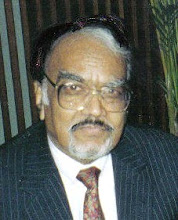
Some time ago there was a news item that with Akshay Kumar as the hero, a film is being planned which will cover evacuation of nearly 150,000 Indian nationals who were caught in Kuwait after the August 1990 invasion by Saddam Hussein's forces. Except for Jordan all other neighbouring countries had closed their borders with Iraq, so I , who was then posted at Amman, Jordan carried out the evacuation of Indian nationals who had come all the way from Kuwait.


Perhaps it will be worthwhile to shift the action to Amman from where the airlift was organised .


In case you know somebody in the film industry connected with the production, direction, et cetera of this project, he could approach me for the real story with all the details. Of course, the project would be written and produced in such a way that it sells in the market. That is understandable.


Some information about the evacuation is given below, including a unanimous  resolution passed by the Indian Citizens Committee of Kuwait to appreciate the herculean task carried out by the Ambassador in Amman. The visiting delegations of ministers etc was a disgrace , wanting entertainment , giving lists of dozens of Indian nationals , to be taken out of tens of thousands of passports and put in the next flight etc .


The Indian ambassador was let down by Foreign Secretaries beginning with Muchkund Dube , Mani Dixit ,Krish Srinivasan ,Salman Haider and others .So much for standing for a colleague ,unjustly treated !


Thanking you in advance. Sincerely,  Gajendra Singh.


Airlift: Akshay Kumar's next a thriller of the biggest human evacuation

Priya Gupta, TNN | Aug 19, 2014, 12.00AM IST


http://timesofindia.indiatimes.com/entertainment/hindi/bollywood/news/Airlift-Akshay-Kumars-next-a-thriller-of-the-biggest-human-evacuation/articleshow/40364005.cms


Facts of History: August 2, 1990, Saddam Hussein invades Kuwait
Saddam Hussein's Iraq in 1990 was in debt to the tune of US $80 billion because of the long-drawn Iran conflict that it had undertaken. Iraq wanted the OPEC (Organisation of the Petroleum Exporting Countries) and specifically Kuwait, to reduce oil production to create a scarcity of oil leading to increasing oil prices, thereby helping Iraq raise more money. But, both the OPEC and Kuwait refused, leaving Iraq furious. On August 2, 1990, Saddam Hussein invaded Kuwait. The Iraqi army took over the city within a few hours. The Kuwaiti royal family managed to escape to Saudi Arabia, leaving the state rudderless. The city was looted and the general population subjugated and made to suffer great tragedies at the hands of the Iraqi army. Kuwait was home to almost 1,70,000 Indians, all of who had suddenly lost all their money, were homeless and scared for their lives. Some of the Indian businessmen got together to form a group that would oversee the evacuation of the huge Indian contingent from war-torn Kuwait. The evacuation was no easy task, as most Indians were not ready to leave everything they had worked for so hard, for so many years. Neither could they, as they did not have valid travel papers as the employers used to hold on to their employee passports once they landed in Kuwait, and those Kuwaiti employers were either dead or had fled by then. 
The India Political scenario in 1990: Politically, India was at its most unstable with VP Singh as its Prime Minister, with the opposition threatening to bring the government down. Not only was India financially in trouble, but also 40% of its crude oil came from that region that was now stuck because of the war. 

READ: Dare To Dance with Akshay Kumar 

The Film: It is in this scenario that Ranjit Katyal (played by Akshay Kumar), a wealthy and powerful Indian businessman, who has always seen himself as a Kuwaiti, rather than an Indian, realises that he no longer wields any influence on the Iraqis, and that he and his family are in as much danger as anyone else. Ranjit unknowingly becomes the man who all 1,70,000 Indians look up to for getting them out safely from Kuwait. Airlift is the story of Indians stranded in Kuwait during this traumatic time. A story of how they, with the help of Ranjit Katyal, managed to survive the Iraqi invasion, and against all odds travelled a thousand kilometres across the border into Amman, Jordan. From Amman, 1,70,000 Indians were brought home by the largest and the most successful evacuation ever attempted by any country, in the history of the world. Over 59 days, the Indian government systematically flew over 488 Air India commercial flights into a war zone to evacuate all 1,70,000 Indians and safely bring them back home. Airlift is an uplifting and entertaining edge-of-the-seat thriller and is the story of the biggest ever human evacuation in the history of mankind.

Airlift, directed by Raja Krishna Menon, starts filming April 2015 and is presented by T-Series and Cape of Good Films; produced by Crouching Tiger and Emmay Entertainment. Bhushan Kumar, talking about the film, said, "It's my conviction that the story will be equally appreciated once on celluloid as much as I loved it during narration. The character that Akshay plays is filled with heroism and I am sure he will add to the perfection with this central character role that he essays."


INDIAN CITIZEN'S COMMITTEE


Patron   H.E ; Prem Singh

                        Ambassador of India

Chairman:      H.S, Vedi

Vice Chairman: Raman Sharma

Secretary:       Mathew Kurvilla

Treasurer:      Abraham Mathew


To ;       Shri P.V. Narsimha Roa ,.

              Prime Minister of India ,

              South Block.

              N. Delhi


INDIAN  CITIZEN'S COMMITTEE  which was formed on the dusty evening of 2nd Aug. 1990

the day of lraqi brutal invasion of' Kuwait met  in the  afternoon of Friday the 1st April 1994 at its

office in Shaab Kuwait and  unanimously passed  thc attached resolution.


Sd-

H.S Vcdi

Chairman I.C.C

2nd April I994..


 C.C

1. Shri Dinesh Singh E.A.M, N. Delhi

2. Shri Salman  Khursheed M.E A - N: Delhi

3. Shri K. Sri Niwasun  F.S - N. Delhi

4. Secretary  to President of India - N. Delhi


Issued 4/4/9


                                           Resolution By Indian Citizen's

                                Committee Kuwait On 1st April 1994


We are extremely happy to have with us today H.E. Gajendra Singh presently Indian ambassador to Turkey, who is one of the few persons who will long be remembered in our minds and recorded in the history of evacuation of Indian citizens of Kuwait for his long dedicated and unstinted services during the dark and black days of vicious Iraqi occupation of Kuwait when he was to our good luck stationed in Amman as our Indian Ambassador.


During the seven months long period from Aug. 1990 to March 1991, the Indian Embassy in Amman under his unflinching leadership imbued with compassion for the plight of Indian evacuees that went beyond the call of duty, in the Herculean task of arranging transport for Indian citizens of Kuwait from the Iraqi Jordanian border, some times even from Baghdad, upto Amman to a distance of over 250 KM and refugee camps, reception and migration for citizens etc. at the border and in Amman, boarding , loading in Amman upto mid Sept. 1990 till international Agencies established refugee camps and finally making sure that our citizens reached India safely. It took nearly six hundred air flights including 420 Air India Flights, an aviation history record to evacuate nearly 140,000 Indian citizens from Amman.


Ambassador Singh stuck to his duties even during the war days of Jan/Feb, 1991, evacuating thousand of Indian citizens including nurses, under most trying and dangerous conditions.


We the members of the Indian Citizens Committee in Kuwait express our sincere thanks and gratitude to you for shouldering such enormous responsibilities under tremendous physical and functional tensions, working round the clock for months without any break during this period.


We had noted with satisfaction that your services and those of your colleagues were widely acclaimed in lndian media including Times of lndia, Indian Express, India To day etc. and even in the international media. The Crown Prince of Jordan, the foreign Minister of Bhutan, International Red Cross and Red Crescent Societies and other organizations, praised the remarkable work "of the Indian Embassy in Amman.


We have, therefore, learnt with great sorrow and anguish that the Govt. of India instead decorating you for your services, have instead punished you in 1992 and 1993 on the basis of

false allegations. We firmly believe and request the Government of India to undo this grave miscarriage of justice and accord you the reward and acclaim which you so surely deserve.


We also are reminded of your meetings with many of us with severe mental, physical tension, sick and dead where you kindly attention and services were of great solace.


We also are aware that had the Govt. of Indian then fully complied with your recommendations, the operation of refugee exodus would have been much smoother.


We also note with utter shame that so called national leaders of that time displayed utter ignorance and incompetence and arrogance in dealing with the situation and further making unforgivable statements in foreign countries . Their graceless behavior left a very bad impression with Jordanian leaders.


We recommend a high level enquiry to the Mismanagement of evacuation Sub-committee of Ministry of External Affairs.


----------------------------------------------------------------------------------------------------------------------

P.O.Box 23228 Safat, Kuwait 13093

Tel: 2624719 - Fax 2623124


                                                                      FOUNDATION FOR INDO-TURKIC STUDIES                         

Tel/Fax ; 004016374602                                                         Amb (Rtd) K Gajendra Singh                                                       

 Emails; Gajendrak@hotmail.com                                               Flat No 5, 3rd Floor

 KGSingh@Yahoo.com                                                                     9, Sos Cotroceni,

 Web site W3.geocities.com/Kgsngh                                                Bucharest (Romania ).

                                                                                                           12 December, 2002


ASIA TIMES online –December 13, 2002


AMBASSADOR'S JOURNAL
Gulf crisis: Lessons from 1991
K Gajendra Singh, who was stationed in Amman as India's ambassador to Jordan during the Gulf crisis of 1990-91, recalls the frantic efforts and bureaucratic bungling in handling the flood of Indian refugee workers from the troubled region. And he ponders whether the Indian government is any better prepared this time around. Ed


AMBASSADOR'S JOURNAL
Gulf crisis: Lessons from 1991 http://www.atimes.com/atimes/South_Asia/DL13Df01.html


By K Gajendra Singh


Dinner on January 15, 1991, at the Indian embassy residence in Amman, the capital of Jordan, turned out to be a much bigger affair than I had bargained for. On January 1, I had casually asked US Ambassador Roger Harrison if he would be free for dinner on the 15th, the deadline given by the coalition led by US President George H W Bush to Iraqi President Saddam Hussein to withdraw from Kuwait, which he had invaded in August 1990.


When Roger said yes, apart from senior Jordanian officials, journalists and others, I also invited ambassadors from the countries represented in the Security Council, my human shield against the coalition attack, as I jokingly remarked. Soon word went round and everyone wanted to join in, and suddenly 70 guests were expected.


I had to dust off ceremonial and personal crockery and cutlery, and set up bridge tables and garden chairs to seat them all. I also had to borrow my cook's TV so that guests could watch King Hussein deliver a stirring speech on Jordanian TV as many were already watching the latest news from Israeli TV. CNN had not yet reached Amman. Guests were sprawled on sofas and wandering through my study and bedrooms. When King Hussein heard about this unusual get together, he remarked that only an ambassador from India could have thought of such a dinner. A great compliment indeed.

Most embassies in Amman had already sent their families home and were functioning on skeleton staff. The cook at the Chinese embassy, though, was considered essential, and understandably, as I have never eaten such tasty Chinese food. There were regular meetings among ambassadors. Tony, the British envoy, would turn up on odd occasions for a spot of bridge to take our minds off the mounting tension. No politics, we had agreed. Once, he got me three down doubled (a rare thing). Tony was delighted, "I do not care if Saddam wins now," he teased. His armed bodyguard would watch TV with my cook, sharing samosas. The Romanian ambassador handed out gas masks designed for oil drilling while the Chinese loaded me with various safety devices to counter poisonous biological attacks. But I used to show them the strong life line on my hand and say that nothing untoward was indicated.

The worst case nightmare for the coalition was that a few germ-loaded Iraqi Scuds (which we could see over the Amman sky cruising towards Israel) would kill a few hundred Israelis, and even the presence of senior US officials stationed in Israel to restrain them would not have stopped the Israelis from joining in the fray and directly marching to Iraq, the first stop being Amman. In the event of that happening, the coalition, almost a mini-UN force, with Pakistani, Egyptian and even Syrian and other Muslim troops in it for the money and other considerations, would have been impossible to hold together.

In this contingency, Western diplomats were to rush to the desert southeast of Amman, from where helicopters would ferry them to war ships positioned in the Gulf of Aqaba, cruising there to enforce the embargo against Iraq. The embassy Indians, though, were to remain in Amman as the ministry in New Delhi could not accommodate the families in its hostels. So our plan was to get into our cars and speed north, if we could, for shelter with the Indian ambassador and his colleagues in Damascus, the capital of Syria.

Having seen rich Indians from Kuwait reduced to sharing or fighting for food or a bottle of water with their workers in the infamous Shalan camp on the way from Kuwait to Jordan via Iraq, the only thing worth saving, I used to say, were my 10 favorite and priceless long-playing records. Only Jordan had kept its borders open with Iraq, so Amman was the only point for entry and exit from Iraq.

Meanwhile, during the evening of January 15, there was an atmosphere of great gaiety and excitement, with adrenaline levels running high after months of anxiety. Apart from sharing an historic evening and exchanging the latest news, everyone was dying to see my collection of LPs. Among them were; Bade Ghulam Ali Khan, Amir Ali Khan, Beethoven, Strauss, Chopin and Mozart. But only Lata Mangeshkar had two LPs in this set, and people were asking who she was. I had to tell them she was one of India's all-time great singers and she had sent me two autographed records (Geeta and Ghazals) after a meeting in 1974 in Paris, where I was then posted. My family and I, aware that she sang only light music, and fearful that thousands of people might be about to die, put on the funereal Requiem. But animated and absorbed in conversation, few heard it. But Roger did, and we both became very sad.

The grand coalition attack on Iraqi forces did not begin that night. It came the next day, January 16, actually in the early hours of the 17th. Despite requests to all journalists to inform us immediately, and a pact with other ambassadors to inform each other, my son Tinoo from New York was the first to telephone me at 00210 hrs (LST) on January 17, and tell me that the attack on Iraq had commenced. Only just woken up, I queried how the hell did he know. CNN, he said. Soon journalists from the Jordan Times and others followed with calls. No wonder that world presidents and others confess that they learn about world events first from CNN. It takes too long for secret messages to be coded and decoded in the chancelleries.

August 2, 1990: The Gulf crisis begins
It all began on August 2, 1990. A day earlier, I had been in the Nabatean pink city of Petra, in the south of Jordan, some 262 kilometers from Amman, once the stronghold of the gifted Nabateans, an early Arab people. The Victorian traveler and poet, Dean Burgeon, gave Petra a description that holds to this day, "Match me such a marvel save in Eastern clime, a rose red city half as old as time."

After a morning visit to the sprawling ruins, just before going for lunch at the hotel restaurant, as per habit, I switched on the BBC news. The news of Iraqi troops entering Kuwait shocked me out of my reveries of the magnificent pink Hazane (treasury ) monument that suddenly comes into view as one rides through a narrow gorge. Truly a marvelous sight. Although Baghdad was 1,200 kilometers from Amman and Kuwait even farther, after three decades in diplomacy I instinctively felt that something was seriously amiss. The next morning I returned to Amman, although I had planned to explore Petra at leisure.

Yes, tension had been building up between Kuwait and Iraq, but an invasion was not on the cards; after all, inter-Arab tensions are not exactly uncommon. The last round of negotiations between Iraq and Kuwait in Jeddah over disputed territory had collapsed on August 1, and Saddam Hussein was incensed, feeling squeezed. Instead of being grateful, Kuwait, with encouragement from the West, was insisting on the repayment of "loans", and it was flooding the oil market, thus lowering the price of a barrel of oil from US$18 to $12 to $14, which hurt Iraq the most.

Saddam also felt that he had saved the Arab Gulf states, many with large Shi'ite populations, from the fury of the Shi'ite revolution in Iran, for which he had been lauded by the Arab masses and governments, and gifted billions of dollars and friendly loans. Western nations, notably the United Kingdom, France and even the US, granted him credit, dual use of technology, chemicals and machinery and even aerial intelligence on Iranian forces.

And of course there remains the mystery and enigma of the full details of the last meeting between the US ambassador to Iraq, April Glaspie, and Saddam in Baghdad on July 25, when she told Saddam that his dispute with Kuwait was a bilateral Arab matter. Glaspie then disappeared from public view, and was barred from giving interviews or writing a book. The Western media did not pursue her as they do others, and with a few exceptions the media have subsequently functioned as a handmaiden of the Pentagon and Western spokesmen.

In the first week of August, there were hectic international political developments, with King Hussein of Jordan playing an active and constructive role in trying to defuse Iraqi aggression with an Arab solution, with help from Saudi and Egyptian leaders. There have been various versions of these events, but it appears that the US finally prevailed on President Hosni Mubarak of Egypt, so dependent on US aid, and he fell into line.

On returning to Delhi in 1984 after six years, having headed missions in Dakar (Senegal) and Bucharest (Romania), I served as chairman-managing director of the Indian Drugs and Pharmaceuticals company, with 13,000 personnel in five units, and established the Foreign Service Training Institute in New Delhi. So my posting in July 1989 to Amman, with only a first secretary and an attache, was considered a light mission. So in Amman my bridge game improved, but I was getting distrait - bored - as the French would say. But this was only the lull before the storm.

From India's point of view, the serious issue was the safety of its foreign workers - about 180,000 in Kuwait and 10,000 in Iraq. By early August they had started to trickle into Amman as refugees. The earliest batches were mostly Indian Hajis - pilgrims to Mecca - a thousand odd, who had been stranded as Air India flights to Iraq and back had been cancelled after August 2. After Mecca, many Hajis, specially Shi'ites, go on a pilgrimage to the holy cities of Najaf and Karbala in neighboring Iraq.

But soon the numbers of refugees from Kuwait reaching the Amman embassy started growing. In the beginning, whatever the time of the day or night, the small Indian staff of half a dozen would rush to make tea or buy food to make the tired Indian arrivals feel at home. In the evening, the embassy would telephone that two or three more buses had arrived from Baghdad - 100 or 150 Indians. This meant arranging places to stay, and providing food until air transport to India could be arranged. Soon the staff were exhausted, but their dedication and that of others who were deputed to help the embassy later, barring a few black sheep, never flagged.

There were more frequent meetings between ambassadors. I would see Crown Prince Hassan and other important persons to assess the political situation and its likely impact on the influx of refugees. In between, I made a few trips to the Jordan-Iraq border, where there was little in terms of facilities and infrastructure. But we had still not envisaged the deluge that was to hit us.

Soon, Amman became vital as it was the only point of access to Baghdad by air, road or telephone. Apart from short telephone contacts allowed between me and the Indian ambassador in Baghdad (the Indian ambassador to Kuwait had shifted to Basra), Iraq and Kuwait were effectively cut off from the world. So, with other countries closing their borders, apart from the refugee flood, Amman became the staging point for international politicians and others visiting Iraq. Soon, too, Amman was crawling with international media.

Because of more than half of Jordan's population being of Palestinian origin and Yasser Arafat's full reciprocal support to Saddam, and Amman's close relations with Iraq, there were regular demonstrations in Amman in support of Saddam and Iraq. Jordan TV gave the Iraqi viewpoint, which was drowned elsewhere by anti-Saddam rhetoric spread by the Western media. For us, the Western viewpoint was available from Israeli TV, across the Jordan Valley 40 kilometers away. It was necessary to keep a watch on political developments to help assess their impact on the influx of refugees.

Jordan had only a small Indian community, mostly workers earning barely $75 to $100 per month, hoping to migrate to better-paying Gulf states. We hired some of them to help us out. Only a few families were well off, but I regret to say that we were let down. In the first week of refugee arrivals, before we had assessed the situation, we requested one family completing a big project to put a van at our disposal. This was refused. We requested another Indian who had an empty warehouse to let us use it to temporarily house the refugees. He also refused. In countries like Saudi Arabia or Iran or Turkey, where only a few thousand refugees in all went in the first few days, there was full support from the well-organized and large Indian communities. Soon, we started hiring whatever accommodation we could find in hotels and flats, and making arrangements for food.

Nearly a million refugees, a majority from Egypt, mostly working in Iraq, and Yemenis and others transited through Jordan, a country of less than 4 million. It was the equivalent of 200 million refugees wading through India and using its infrastructure. There was pressure on accommodation, food and transport and decisions had to be taken on the spot. Apart from morning and evening policy sessions with my colleagues, I would invite them by turn for a meal to maintain espirit de corps and I tried to make their living conditions as smooth as possible. They were working 14 to 18 hours every day, many even when ill and down with fever. The main stress was on patience against all provocation from the refugees, who, while they had been silent while in Kuwait or Iraq, started shouting and abusing once they saw Indian embassy personnel. As the majority of the refugees were from Kerala in India, four officers who had come to assist us had to pretend that they did not understand the abuses showered on them in Malyali. Some of our personnel were even assaulted and embassy cars stoned by tired and jittery Indian refugees. On many occasions the Jordan police had to step in.

The Indian government did not appreciate the gravity of the situation and gave us too little too late. In a fast-changing situation, when I requested Delhi to depute more staff, they quoted back the previous week's telegram. They even sent a junior officer to study the situation, who, on arrival, appeared more interested in visiting Petra. We had to carry out the evacuation as per normal rules designed for a few or 50 or even 100-odd stranded Indians abroad. We had to follow them, even though three to four thousand Indians per day were flying out on 10 to 15 Air India and International Movement Organization (IMO) flights. This included making them sign indemnity bonds and providing individual tickets. Despite my pleas, these superfluous formalities were not done away with. It meant queuing up for registration, air tickets and the return of forms etc, by tired and hungry refugees, even when there were up to 8,000 of them in Amman.

Once the evacuation was over, the government of India did decide to waive the indemnity ie repayment of the cost of the ticket. In 106 charity flights organized for Indians by the IOM, the only formality was the registration of the passengers in the flight manifest with passport details, etc. Without time-consuming and unnecessary formalities, the refugees would have been saved much stress and strain and my colleagues (15 to 25 at the peak ), who had to be at the embassy, hotels, apartment blocks, airports, border points and even in no man's land, could have devoted more time to looking after the comforts of the evacuees.

External Affairs Minister Inder Kumar Gujral, during his transit stay in Amman in early August 1990 on the way to his famous hug with Saddam Hussein in Baghdad and the "Millionaire's flight" in an Indian Air Force aircraft from Kuwait, as the media described it, appeared curiously reluctant to meet King Hussein and Crown Prince Hassan. They received him with great warmth and brought him up to date on the situation, of which he appeared to have little grasp. Later, a non-professional Indian diplomat was sent to Amman by Gujral, who wanted to be included with King Hussein and King Hassan of Morocco, then planning to take a peace mission to Saddam. The Hashemite palace was most embarrassed. Gujral made extravagant promises to Indians in Kuwait, such as flying them out from Basra and Baghdad, with planes waiting for them. In my office, Gujral told waiting Indian refugees that they would get air tickets for their home towns on arrival in Bombay. All they got were the lowest class train tickets. He was making extravagant promises as if he were fighting a parliamentary election.

To overcome the staff shortage problem at the embassy on a permanent basis, Gujral, in consultation with the Foreign Secretary Muchkund Dubey, selected an officer. But that officer never reached Amman to assist "people like us". Gujral kept shouting at everyone in Amman until he left for Baghdad, much to the disgust of the officers and staff who had just started trickling in from India to assist us in our monumental task, which even we had not envisaged. Gujral appeared to be edgy, short-tempered and rude. But much worse was to follow. Except for Civil Aviation Minister Arif Mohammed Khan, who flew in with the first Air India plane on August 12, who was a gentleman of the old school.

It speaks volumes for the Indian government's perspective and contingency planning under I K Gujral and the foreign secretary that it held the only conference of Indian ambassadors in the region to discuss the refugee problem and international political developments just a few days before the deadline for Iraq's withdrawal on January 15.

Now the US, with support from the UK, is threatening a war and regime change in Iraq. If it takes place, it will be a terribly messy affair, overflowing if not involving neighboring Turkey and the Arab states, including Saudi Arabia, which is also under scrutiny and attack by the hawks in the US administration. Unlike 1990-91, when they were enthusiastic allies, these states are now reluctant to support the US' unilateral action. The gulf region has nearly 5 million Indian workers. The question is, has the Indian government learned from its mistakes, and is it prepared this time around?

K Gajendra Singh, Indian ambassador (retired), served as ambassador to Turkey from August 1992 to April 1996. Prior to that, he served terms as ambassador to Jordan, Romania and Senegal.

(©2002 Asia Times Online Co, Ltd. All rights reserved. Please contactcontent@atimes.com for information on our sales and syndication policies.)



Greater Middle East ; Russia and Allies to Call the Shots !


Greater Middle East ; Russia and Allies to Call the Shots !


Author's note ;The world is passing through a very critical period in human history .This piece  is meant for those interested in external events and its ramifications on India ( most Indians are ignoranti , watching their navals or stupid fulminations against failed state Pakistan or talking about a Hindutva past ,far from truth or even rationality –God Save India from Hindutva forces )


After the collapse of the Berlin Wall and the Soviet Union in 1990 – 91, unfortunately a very retrograde human development , words like science ,socialism and equality have disappeared and the neo-con led neo- liberal capitalism and emergence of religions in its very primitive forms with their harmful religious practices and beliefs have been enforced throughout the world.


To any sane mind it should be clear that it should not and cannot last long, in humanity's progress towards equality .Science cannot and should not be banished except at great peril to human civilisation , progress and humanity itself. Like in medieval era Catholic Popes punishing Galeleo for his scientific truths against obscure and primitive religious beliefs and practices .


Since retiring as ambassador to Turkey and Azerbaijan in 1996, the author has written nearly 400 articles for major newspapers ,websites etc which have been translated into 12 major languages of the world. Having been posted to Cairo, Algiers and Amman (1989 – 92 when Saddam Hussein was fooled into invading Kuwait,) and Turkey (two postings and total stay of 10 years ) a large number of articles have been on the greater Middle East.


It would appear that since the election of Vladimir Putin as the leader of the Russian Federation ( he has support of almost 80% of Russians ) , time has now come to oppose the West , after a series of US led devastating blunders which have cost populations in south-east Asia, greater Middle East in millions of lives and destruction of many countries.


Finally, there seems to be an end insight of the rampaging uncivilised state of America, which was born after the migration and colonisation of West Europeans mostly English to the new continent, genocide of original inhabitants of what is now known as USA .After WWII, US's rampaging military has led destruction all around the world. In USA the power is built around Rockefellers and other Jewish families and Jews , who control the banks ,energy  and armament sectors and in London ,the Cityof  the Rothshields.


Throughout history ,mostly it is the barbarian nations who invade civilised and sedentary  communities and states. So it has been from the West to the East from the end of the 17th century when the Ottoman Turks are stopped at the gates of Vienna .It now appears that time has come for a turnaround with Russia under Putin making a stand in Syria with a ; enough is enough. It is being joined by China and Iran among others .The destruction brought about by criminal US elite, British poodles , sometimes joined by the French has been terrible in the region . Countries have been destroyed , millions have been killed and tens of millions made homeless and refugees .


The present-day boundaries and frontiers of the greater Middle East were created after WWI following the collapse of the Ottoman Empire. Russia had little role in that . USA was a faraway rising power .The victorious powers were led by UK, France and other Europeans .


(When US or Poodle UK talk of international Community, mostly it is them with France and some obscure island nations in the pacific)


Now Middle East has already a Shia Iraqi state, an almost independent state in Kurdish north Iraq, territories controlled by Kurds in north-west Syria , south of Turkey's border. Quite clearly Syria will not remain what it was before the rebellion; financed, with many rebels trained by USA and its NATO allies specially Turkey, with funds from Saudi Arabia, Qatar etc. A Sunni Arab state could emerge after negotiations in areas now controlled and abused by Sunni ISIS .Because of hair brained ,Islamist and expansionist crazy policies ,Ankara would also suffer .


It may be noted that Moscow did not intervene when US,UK ,France and Italy destroyed a flourishing Libyan state ( now in tatters and home to Muslim extremists and Jihadis ).Russia did not have vital strategic interests there, and it was too distant to resist .It gave time to prepare for the expected US led Western aggression, which came as close as Ukraine itself , against all agreements and international  treaties . But Moscow had maintained its strategic naval and military assets and presence on the Syrian Mediterranean Coast


I'm reproducing at the end one of the many scores of articles I wrote on the US led illegal invasion of Iraq in 2003.


http://tarafits.blogspot.com/2011/12/50-articles-on-us-led-illegal-war-on.html

After  the resistance put up by Iraqi population against the American GIs, against all odds , the cowardly US have dared not place boots on the ground in the Middle East except some special forces or its proxies from the Arab world.


Putin at the UN: ISIS and unipolarity will be buried together

September 29, 2015 –

(The following was sent by Russian Embassy in Delhi to Indian Govt )

PRESS RELEASE


New Delhi, September 30, 2015


The Embassy of the Russian Federation in India officially informed the Ministry of External Affairs, Government of India, that in accordance with the request of H.E. Mr Bashar al-Assad, President of the Syrian Arab Republic, for providing military assistance in fighting against ISIS and other terrorist groups in Syria the Russian Federation begins air and rocket attacks on terrorist locations on all territory of the Syrian Arab Republic on September 30, 2015.


Regards,


Tanya K.,

Press Attaché
Embassy of the Russian Federation
New Delhi
Shantipath, Chanakyapuri


Translated for Fort Russ by J. Arnoldski


"Putin at the UN: It was steeper than Munich"

Let's note a simple thing which is absolutely essential for understanding what happened in New York. The Kremlin, and this is already absolutely obvious, is going to put an end to ISIS. This will solve several Russian problems and give Russia some tangible bonuses:

We will eliminate a terrorist threat to our country at a distance. Every ISISer killed in Syria is an ISISer which didn't come to Russia to fight;


Retaining control over Syria, we will permanently suspend the project of the Qatar-EU gas pipeline, which is a dream of the USA. The Russian gas stranglehold around the neck of Europe will remain in place, and this is very important;


Eliminating ISIS in Syria and Iraq, we will cut off the supply of smuggled oil, which is sold at dumping prices, to world markets. This alone will pay for any military operation against ISIS within a few months, if not a few weeks. 


Russia, keeping the gas stranglehold around the neck of the EU, will remove another noose around the neck of Europe - the American slipknot in the form of an influx of refugees allegedly fleeing ISIS. American NGO's, which are massively organizing an "exodus of Arabs to the EU" will collapse, and after the defeat of ISIS, EU residents will not be forced to accept millions of refugees, even if they show hundreds more staged photos of children's corpses;


Russia will fix itself among the main "providers of security" in the Middle East. This position is expensive in the most literal sense, as the main trade routes of the planet intersect the Middle East and the main sources of hydrocarbons are located there. 


In his own time, Putin blocked the military intervention of the USA in Syria, and now Putin himself is actually leading a military intervention in Syria, and the US can't do anything about it. It's enough to understand who has won and who has lost the game. The US tried to intervene and failed. Russia, by forces of an international coalition, will conduct an intervention, and after yesterday it has become clear that the US already can't stop it. Of course, they will put sticks in the wheels, but Washington already can't block the process. 


If someone thought that Obama expressed himself harshly and "showed" Russia, then this impression is solely from a misunderstanding of the situation. The confrontational variant of the statements of the leader of the US should sound like this: "Russia is the enemy of democracy, it is an aggressor, a rogue state. The international community cannot allow this country to intervene in the situation in Syria under the guise of fighting terrorism. Russia is a threat to the world on par with ISIS and the Ebola virus, as I've already said. If Moscow and its allies will attempt to conduct a military operation in Syria, we and our allies will be forced to take drastic measures of political, economic, and military nature." This would be confrontational. It was specifically this which the part of the elite which sponsored and fostered ISIS, and which relied on ISIS as the main geopolitical weapon of the US in the "new American century," demanded from Obama. From the point of view of this very significant and influential part of the American elite this is probably happening: Putin is going to destroy assets (expensive and needed assets!) of respected American elites, and the American president is smiling at the camera talking about how it's important that "girls go to school," that he recognizes that the US cannot solve the world's problems, and he also allows for the possibility of constructive cooperation over Syria with Tehran and Moscow! Yes, he said that Assad must go, but everyone understands that, after the destruction of ISIS, the fate of Assad will clearly not be decided in Washington.


Imagine that you bought an expensive sports car. A certain Vladimir approached it with a bat and clear intention to break its glass, puncture its tires, and even turn it into scrap metal. Summoned to the place of this act of geopolitical vandalism, the black cop Barry, instead of shooting, starts drinking champagne with Vladimir and discusses "constructive cooperation." The indignation of the American elites can be understood, and in this context the tirade of experts and neoconservatives from Fox News, who complain about the "shocking return of Russia" to the political olympics, is quite understandable. 


It's necessary to understand that the behavior of the part of the American elite which stands behind Obama, and who refused to go to direct confrontation over Syria, was not caused by a surge of humanity, but has a purely rational calculation underlying it. If the neo-conservatives - and they are among the Democrats (the Clintons) and the Republicans (the Koches and Kagans) - hope that with the aid of "controlled chaos" they can drive the rest of the world back to 1993, the more reasonable part of the elite (the moderate Democrats and moderate Republicans) understand that attempting to maintain global hegemony in the current environment will most likely end in not only a loss of hegemony, but losing everything in general. Actually, we are witnessing an attempt to return to 2010 within the framework of the G20, when breakthroughs were achieved in agreeing in terms of dividing spheres of influence and reforming the global financial system. How successful this return will be depends on the outcome of the intra-elite struggle in the United States. This can be judged only after a few months. 

In the framework of the UN session and subsequent negotiations, an unprecedented tough stance of Beijing was recorded:


"Measures to combat terrorism can only be undertaken on the basis of the UN Charter and respecting state sovereignty and territorial integrity, and China supports Russia's actions in this sphere," a representative of the Foreign Ministry of China noted, as reported by TASS. 


Support over Syria is good, but even more significant is the specific, targeted "kick" at the American neoconservatives in Xi's speech.


His statement that "absolute security for one country" is unattainable is a reference as straight as an arrow to the fundamental concept of the ideology of American neo-conservatives, who believe that "absolute security" is the main value and the main purpose of foreign policy, the achievement of which justifies any crimes and any violations of international law. The principle of "absolute security" is the cornerstone of the "project for a new American century," of overwhelmingly influential American NGO's under the management of Robert Kagan, the husband of Victoria Nuland. The doctrine of a "new American century" became the theoretical foundation for the interventions in Iraq and Libya, the color revolutions, and the Arab Spring. Comrade Xi in fact said that there is no "new American century." The speech of the Chinese leader deserves a separate and careful analysis, to which I hope to return in the future.


We are moving towards a period of radical changes in the global political and economic system. The sprout of these changes was indicated in New York.


Specifically, Putin harshly criticized the TTIP agreement, through which the US attempted to "gobble up" the economy of Europe, just as the EU uses "association agreements" against weaker countries. The Russian president outlined a statement for blocking the agreement which is fundamental for the US, and which for several years they have tried to push behind closed doors in spite of the resistance of European business, which really doesn't want to die.


Putin strongly suggested that the US calm itself down, and offered Europe a Chinese-Russian model of economic integration in a common space of trade and security. This is a very serious claim with very serious consequences. As your obedient servant already wrote, "we need Berlin."


Another statement with far-reaching consequences was voiced by Nursultan Nazarbayev, who outlined the need for creating a supranational reserve currency, that is, he in fact suggested sending the dollar into retirement. The president of Kazakhstan continues the Asian political tradition: radical proposals are voiced by Nazarbayev, and then they suddenly find support in Beijing and Moscow. But that's a topic for another piece.


The results of the UN assembly session are the following:


The unipolar world is dead and will never recover


A team of gravediggers of the unipolar world has been formed and is getting to work

ISIS has all the chances to find peace alongside the unipolar world


The battle for the EU is entering a new phase and the Sino-Russian team has all the chances to win it


By the spur of the moment, Russia is becoming one of the leaders of the Muslim world because of its role as the coordinator of the anti-ISIL coalition.


Everyone is implicated: King Abdullah, Nazarbayev, Xi, and, of course, Vladimir Vladimirovich, and they worked wonderfully. Everything that could have practically happened happened. 


The ground situation in Middle east before the US led illegal invasion of Iraq in 2003                                                                     

                                                                                                           27 August , 2002


ASIA TIMES online Hongkong-Bangkok <www.atimes.com>  27 August,2002


Middle East

COMMENTARY

An entire region from Jordan to Iran is on the brink of catastrophe as it awaits one man's decision on how he will pursue his family' vendetta .India's former Ambassador to Jordan looks inside the Pandora's box which George Bush holds in his hands. Editor

The Bush family's phony wars  by K Gajendra Singh                                www.atimes.com/atimes/Middle_East/DH27Ak01.html

For the Bush family, Iraqi President Saddam Hussein is the tempting Apple in the Middle Eastern Garden of Eden. The results of succumbing to the temptation to take a bite could be as disastrous as they were for Adam and Eve.

In 1991 George Bush Sr sought the removal of Iraqi President Saddam Hussein. He failed and left the region in a mess. Now his son, President George W Bush, having inherited Dick Cheney and other chieftains from his father's presidency, is pursuing the family vendetta. Ordinary Iraqis continue to pay the price of this vendetta, with more than half a million children reported to have died from lack of medicines and malnutrition since the 1990 embargo. Iraq's US-friendly neighbors like Jordan and Turkey are suffering too. Even during the hiatus of Bill Clinton's presidency, Iraq was not spared: it was bombed whenever Clinton's popularity went down or he got deeper into the Monica Lewinsky mess.

It is difficult to know what to believe of the leaks regarding the US's current options to oust Saddam, ranging from assassination, fomenting a coup or internal rebellion, air strikes against Baghdad and other Iraqi command centers, to a vast amphibious invasion with massive air support, involving up to 250,000 soldiers. The latest plan, involving around 60,000 troops backed by heavy air power, will begin with a swift attack on Saddam's elite Republican Guards around Baghdad, in the hope that the regular Iraqi army would then abandon Saddam. Such balderdash. The result of any such actions could be as catastrophic as Adam and Eve's expulsion from the Garden of Eden. However, there is room for hope that worse may not come to worst: a saving grace of the US constitutional system of checks and balances is that Bush may be the most powerful man in the world, but he can't ignore Congress. And, however much George Bush Sr might hate Saddam, he would not want his son's presidency to end in disgrace.


Secretary of State Colin Powell, one of a few sane voices in the administration, remains opposed to a military strike just as he was in 1991, as it has no clear strategic objectives. Recent media leaks from the Pentagon and the State Department suggested that "many senior US military officers contend that Saddam Hussein poses no immediate threat and that the United States should continue its policy of containment rather than invade Iraq". Soon another leak countered that some in the Establishment favored an "inside-out" plan to "take Baghdad and one or two key command centers and weapons depots first, in hopes of cutting off the country's leadership and causing a quick collapse of the government". Such a plan was once dismissed by General Anthony Zinni, the US Middle East envoy, as a recipe for a "Bay of Goats" disaster, like the 1961 Bay of Pigs fiasco in Cuba. (Remember too the mess of Jimmy Carter's 1979 attempt to rescue US hostages in Iran.)

As Powell knows, there are no clearly defined strategic objectives for an attack on Iraq. Instead, Bush has his hands on a Pandora's Box that would release incalculable forces and consequences if he were to open it. One of these in calculables, for example, is Jordan's Prince Hassan. The prince's unexpected appearance at a mid-July Western-rigged assembly of disunited and disgruntled Iraqi opposition leaders led to speculation that he might even emerge as a new consensus ruler of post-Saddam Iraq.

King Abdullah of Jordan has himself repeatedly refuted reports that the US could use his country as a base for attacking Iraq, and furthermore has warned that an attack would further destabilize the region. This is also the consensus of many strategic analysts. But Hassan's cameo appearance remains intriguing. An intellectual, married to late Indian vice president M Hidayatullah's niece, Hassan was crown prince for decades. But just before his death, King Hussein - Hassan's elder brother - anointed his eldest son Abdullah, from his British wife, as the next king, and made another son, Hamza, from his American wife, the new crown prince, thus creating some emotional Anglo-Saxon vested interest in the perpetuation of the Hashemite dynasty. (The last Iraqi king, Feisel II, was Hassan's cousin and was assassinated after a military coup in 1958.)

Background and seeds of disputes
The Tigris and Euphrates basin has a turbulent history. The armies of Islam carved an empire from the Atlantic to China in the Seventh Century, and the Arabian peninsula became part of it. After Ottoman Sultan annexed the caliphate and guardianship of Mecca and Medina, the peninsula became a peaceful backwater until World War I. But when Turkey sided with Germany, Britain, to protect its Indian possession and the Suez Canal lifeline, encouraged Arabs under Hashemite ruler Sharif Hussein of Hijaj to revolt against the caliph in Istanbul (and deputed spy T E Lawrence to help out). The war's end did not bring freedom to the Arabs as promised; at the same time, by secret Sykes-Picot agreement, the British and French arbitrarily divided the sultan's Arab domains and their warring populations of Shi'ites, Sunnis, Alawite Muslims, Druse, and Christians. The French took most of greater Syria, dividing it into Syria and Christian-dominated Lebanon. The British kept Palestine, Iraq and the rest of Arabia.

When Sharif Hussein's son Emir Feisel arrived to claim Damascus, Syria, the French chased him out. So the British installed him on the Iraqi throne. When the other son, Emir Abdullah, turned up in Amman, British Prime Minister Winston Churchill, dining in a Jerusalem hotel, reportedly drew on a napkin the borders of a new Emirate of Trans-Jordan, encompassing wasteland vaguely claimed by Syrians, Saudis and Iraqis.

Later, as Sharif Hussein (who wanted the Caliphate after Ataturk had abolished it) proved obdurate to the British viewpoint, Britain let Ibn Saud and his Wahhabis hound him out of Mecca. Britain also denied Kemal Ataturk's new Turkish republic the oil-rich Kurdish areas of Mosul and Kirkuk, now in northern Iraq. To thwart Germany posing a danger to India via the Berlin-Basra railroad, the British had earlier propped up oil-rich Kuwait, traditionally ruled by Ottoman pashas in Basra. This throttled Iraqi access to the Persian Gulf. Iraq became somewhat (though not fully!) reconciled to an independent Kuwait only in 1961.

By 1917 Britain's Balfour Declaration had also promised a homeland for Jews in Palestine. European Jews began emigrating to Palestine, and the trickle became a flood with the rise of anti-Semitic policies in Nazi Germany and elsewhere in Europe. After World War II, the state of Israel, carved out of British Palestine, was not recognized by the Arabs. The 1948 Arab-Israeli war allowed Israel to expand its area, while Jordan annexed the West Bank and Egypt took over Gaza. In the Six-Day War of 1967, Israel captured the West bank and Gaza. Thus were laid the foundations for most of the problems of the region.

Following the rise of Arab nationalism in the early 1950s led by Colonel Gamal Nasser of Egypt, socialists and nationalists, mostly military officers, took over the medieval kingdoms of Yemen, Syria, Iraq and Libya - much to the consternation of Western oil companies.

From its very inception, almost all its neighbors coveted Jordan. But astute King Hussein not only survived a dozen assassination attempts, he also fended off conspiracies against his land. When he died in 1999 of cancer, the kingdom had become a keystone of equilibrium in the region and a modern flourishing state, despite lacking oil and other resources. The sop of the Iraqi throne to Prince Hassan could just be another trick. But it is true that rulers in the region have patience and long memories. Even during the 1991 Gulf War it was put about that neutrality on the part of King Hussein could lead to his kingdom being parceled - but if he sided with the US, he might get parts of Iraq, which after all was once a Hashemite patrimony.

Palestinians make up 60 percent of Jordan's population (some Israeli leaders say that in Jordan Palestinians already have their own state). PLO militants and Palestinian army officers conspired against King Hussein (King Abdullah, his grandfather, was assassinated by a Palestinian in 1951), who expelled the Arafat-led PLO to Beirut in the early 1970s.

Jordan's business community relies heavily on transit and direct trade with Iraq, and still gets free oil from it. Thus, Prince Hassan's maneuver could cost a lot if Iraq so decides. Before the 1991 Gulf War, Saddam Hussein had promised full support to the Palestinian cause. During the war, King Hussein maintained neutrality despite Western pressure, anger and bad-mouthing. Palestinians and their leadership had fully supported Saddam in 1990-91, and Jordan's stand. But adroit King Hussein remained a major Arab player in a Middle East peace settlement and was brought from his death bed to bless the White House ceremony for the Arafat-Rabin accord. Some cynics say that Hussein never favored a powerful Palestinian state, and that suits Israel and the US. To survive in Amman, a Hashemite ruler has to be extremely nimble.

Gulf crisis and war, 1990-91
The US stumbled into the 1991 war without any strategic thought or planning. In fact, the West had supported Iraq's long war against Khomeini's Iran, and the US had granted loans to Baghdad worth billions of dollars. Amid high tension between Kuwait and Baghdad over common oil wells, two islands, and the return of a $10 billion loan, Iraq threatened Kuwait with war. A few days before the Iraqi invasion on August 2, 1990, US Ambassador April Glaspie told Saddam Hussein that his dispute with Kuwait was a bilateral Arab affair. This was never clearly refuted by the US and Ambassador Glaspie disappeared from view. The Western media never pursued her as they do others, and allowed themselves to become a handmaiden of the Western propaganda machine. (Later, they wrote little about the slaughter of retreating and surrendering Iraqi soldiers, and their credibility has declined further since then.) Meanwhile, all attempts to find a peaceful solution to the Iraq-Kuwait row by Arab nations, led by King Hussein of Jordan and later joined by King Hassan of Morocco, were rebuffed by the US, as was Kuwait's offer of indirect negotiations. Feelers for negotiations by the Saudis were drowned in Western cacophony. Saddam's reported offer to the UN secretary general to withdraw from Kuwait, made just before the US retaliation, was brushed aside. Efforts by Mikhail Gorbachev, who had just unraveled the USSR, were treated with disdain.

Post-1991 Gulf War scene
Bush had attacked Iraq in 1991 without informing the UN secretary general, undermining the world body and further diminishing it. For the countries of the region, the war resolved nothing. Instead, the US made Kuwait, Saudi Arabia and other allies pay through the nose, weakening them by an estimated $100-$150 billion. Iraq was bombed into the Middle Ages. Its enemy Iran, now a joint member of the "Axis of Evil", was the major gainer. To guard his back, Saddam in 1990 had agreed to the old boundary with Iran in the Shatt-al Arab waterway, disagreement over which had led to the Iran-Iraq War.


US promises turned sour in the aftermath of the Gulf War. George Bush Sr, without consulting his allies, encouraged Iraqis, especially Kurds in the north and Shi'ites in the south, to revolt. Saudi Arabia and the Gulf states, most of which had large Shi'ite populations, were horrified, as a Shi'ite state in south Iraq would strengthen Iran. The prospect of independence for Iraqi Kurds worried Turkey, whose own Kurds were fighting for freedom. The hapless Iraqi Kurds, now protected by the US-UK enforced "no-fly zone", and the Shi'ites paid a terrible price. Tens of thousands were killed by Saddam's biological and other weapons. The Iraqi Kurds and Shi'ites still remember the false US promises. Both Kurdish factions in north Iraq have now expressed opposition to current US plans to attack Iraq.

Turkish President Turgut Ozal, seduced by US hints of winning "lost" Kurdish areas of north Iraq, had become an energetic supporter of the Bush coalition in 1990-91. He almost opened another front in the war against Iraq, but was prevented by stiff opposition from his powerful military. But instead of getting oil-rich Mosul and Kirkuk, the economic sanctions against Iraq and closure of the Iraqi pipeline via Turkey cost Ankara $50 billion in lost trade. Unemployment rose as the sanctions halted the 5,000 trucks that used to roar to and from Iraq daily, aggravating the economic and social problems in Turkey's Kurdish heartland of rebellion. A deputy prime minister once ruefully told this writer, "Mr Ambassador, you cannot trust the Americans, not even their written promises." A sobering thought for those who support the US blindly.

Iraq's emasculation made Israel feel bolder. Now Ariel Sharon wants Palestinians under Israel's heel. But the Palestinians, the most radicalized among Arabs, will not give up. Intifada was and is indigenous. (The PLO, now corrupted, just took the credit.) Arab and Muslim masses the world over watch what is happening in Palestine with great anger. This, and random US and UK bombing of Iraq, are among the reasons cited for the September 11 attacks on the US. Now, unlike 1991, the rage of the Arab masses could flush away many pro-US regimes.

Turkey's NATO Incirlik air base, used regularly to bomb Iraq, was also used by the US in its war in Afghanistan, after allies like Saudi Arabia had refused their bases. Turkey was also the first Muslim country to offer troops to fight against the Taliban and al-Qaeda, to help its ethnic Uzbek cousins led by Rashid Dostum. It had earlier supported the Northern Alliance against Mullah Omar's Pashtun Taliban and Osama bin Laden's Arab and Pakistani jihadis.

But watching how the Anglo-Saxons conducted their war in Afghanistan, often bombing civilians without catching the Taliban or al-Qaeda leadership, the Turks have had second thoughts. They were cajoled with money and other incentives to take over the leadership of foreign forces in Afghanistan from the British. In spite of its precarious financial situation and dependence on the International Monetary Fund, Turkey's political and military leaders now strongly oppose current US plans to attack Iraq.

Saddam's counter moves
Even now, a financially squeezed Saddam Hussein sends money to families of Palestinian suicide bombers. Iraq has normalized relations with most Arab states in the region, including Qatar, Bahrain, Oman and the United Arab Emirates. It has trade relations with Saudi Arabia, and its relations with Kuwait have thawed. Its foreign minister recently visited Algeria, Iran and Syria and met with Jordan's king.

The Beirut summit of Arab leaders last March rejected "threats of aggression" against Iraq, called for lifting of sanctions, and urged everyone to respect Iraq's independence, sovereignty, and territorial integrity. Saddam, disingenuously or not, has indicated willingness to talk about the return of UN weapons inspectors. United Nations Secretary General Kofi Annan himself opposes renewed US attacks against Iraq.

Qatar - sympathetic to Iraq - officially opposes war, but the US has an air base at al-Udeid. The US also has bases in Saudi Arabia, which opposes their use. But clients and real estates in the Gulf and elsewhere can be bulldozed by US pressure or show of force.

Meanwhile, US and British special forces in Afghanistan have little to show from operations like Candor, Snipe, Anaconda, Mountain Lion etc. Al-Qaeda and Taliban have vanished into Pakistan and southern Afghanistan sanctuaries. The Northern Alliance entered Kabul in spite of US opposition and refuses to fully toe the US line. The Afghan regime, led by former Unocal employee Hamid Karzai but dominated by Tajiks, remains insecure. Afghanistan is returning to the days of pre-Taliban warlords. With his US bodyguards, Pashtuns now call Karzai "USA's Babrak Karmal".

It is difficult to trust the US, with its track record in Vietnam, Afghanistan, Somalia, Bosnia and Serbia. What will Pandora's Box reveal in Iraq? How will Iran and Turkey react in a free-for-all over Kurdish north Iraq? The US was unclear in its strategic aims in 1991 and still is in 2002. At least there was a solid coalition in 1991; now there is none except for British Prime Minister Tony Blair, whose own people are opposed.

Opposition to US plans
France, Russia and China had opposed US-UK policies for expansion of no-fly zones over Iraq and other measures, and now want action though the UN. Iraq is Russia's old ally and owes it $8 billion. Russia has to worry also about a backlash among its large Muslim population. "Any attack would only be justified if a mandate was approved by the UN Security Council," President Jacques Chirac of France said after a recent meeting with Chancellor Gerhard Schroeder of Germany. "That is the position of Germany and France." In his election speeches, Schroeder has clearly expressed opposition to US plans to attack Iraq. It is the position of most other countries.

Afraid that a new Security Council resolution would be vetoed by Russia or China, US officials claim that in view of Saddam's defiance of past UN mandates - including expulsion of UN weapons inspectors in 1998 - no further UN action is necessary. Saddam did expel UN weapons inspectors, but to claim that there is already a UN mandate for an invasion is untenable. According to the new Bush doctrine, an attack would be "pre-emptive self-defense". But this doctrine could be used to justify military adventurism from Chechnya to Palestine, or to bomb a schoolboy studying nuclear physics in Rameshwaram.

There is not even a casus belli. Unlike 1990-91, there is no clear-cut aggression. The US administration has failed to establish any link between Iraq and the September 11 attacks. Blair had promised proof but has not yet delivered. In fact, the fanatics who attacked America came from Saudi Arabia and Egypt, staunch US allies. No US bombs have fallen on these American protectorates. Instead, more than 5,000 civilians have been bombed to death in stricken Afghanistan.

There is no persuasive evidence that Iraq has rebuilt weapons facilities dismantled after the 1991 war. Even if Iraq has small stockpiles of lethal chemical and biological weapons and some Scud missiles, Saddam will use them only if attacked. Even obedient weapons inspector Richard Butler told the US Senate that there was no evidence that Iraq had passed weapons technology to non-Iraqi terrorist groups. Scott Ritter, another former UN weapons inspector in Iraq, has said that the US has not produced enough hard evidence to justify an attack. Rolf Ekeus, the Swedish arms inspector from 1991 to 1997, accused the US last month of manipulating the UN mission for its own ends. The US was more keen on tracking Saddam's whereabouts, which "could be of interest if one were to target him personally".

Saudi Arabia was misled in 1991 by doctored evidence of Saddam's intentions. The stationing of US troops on sacred Arabian soil after the war is resented by Arabs and Muslims all over the world. They also oppose oppressive pro-US Arab regimes and their siphoning off of oil wealth. After September 11, most Muslims see the Arab-Israel conflict and US plans to attack Iraq as part of Crusade versus Jihad. In Saudi Arabia, the union of corrupt princes and fanatical Wahhabis is already under strain. The Shah of Iran had a very powerful military machine but was forced to flee the aroused masses. Reports now emanating from the US say that Saudi Arabia should be treated as a US enemy because it supports jihadis all over the world. If necessary, its oil fields could be occupied. Anyway, after Saddam's replacement with a "democratic regime", Iraqi oil will be available as a replacement.

The morning after: Post-Saddam Iraq
What of the post-Saddam scenario? Who will run Iraq? In spite of Western belief, Saddam remains popular with the masses, who blame the embargo and frequent bombings for their misery. Given Iraq's 40-year history of repression, it is highly likely that blood will flow with the settling of old scores. And who would stop the Iraqi people turning against the occupying Americans?

What if a Shi'ite state based in Basra declared independence with covert support from Iran? North Iraqi Kurds, almost autonomous since 1991, could also declare independence, leaving a Sunni-dominated center. This could tempt Turkey to move into Mosul and Kirkuk. To keep post-Saddam Iraq united would need security forces of around 75,000, costing about $15 billion, for a year or two, and a force of more than 5,000 for many years after if the reconstruction effort is to succeed. But would the result be any different than in Afghanistan?

Most analysts scratch their heads, only to conclude that US options make little strategic sense. They feel that the leaking of "attack plans" are only psychological warfare. Their preferred option is to continue the existing policy of containment, combined with attempts to destabilize the Iraqi regime. A US attack could dangerously destabilize the region, harm the global economy, and infuriate Arab and Muslim masses. Former British chief of staff Field Marshal Lord Bramall, warned in a letter to the Times that an invasion would pour "petrol rather than water" on the flames and provide al-Qaeda with more recruits. He quoted a predecessor who during the 1956 Suez crisis said: "Of course we can get to Cairo, but what I want to know is what the bloody hell we do when we get there?"

The whole thing is only accentuating the image of the "Ugly American". A respected non-partisan US think tank, the Council on Foreign Relations, said in a recent report to the White House, "Around the world, from western Europe to the Far East, many see the United States as arrogant, hypocritical, self-absorbed, self-indulgent, and contemptuous of others."

Conclusion: Raging bull
With its vast military-industrial complex, the US needs constant conflict, ie, wars or near wars, to justify its staggering expenditure. The only superpower, with the most destructive power at its command in history, has pretensions to be an imperial power without the grace or obligations that go with it. After the stunning events of September 11, it is behaving like a raging bull, as if its manhood had been castrated. But the enemy al-Qaeda, with its tentacles around the world, remains free and hidden. Attacking Iraq would give the impression that the flagging "war on terror" is going somewhere. As Bush found in Afghanistan, whacking foreigners is popular with many Americans and wins votes. Iraq and hapless Iraqis would fit and foot the bill. Moreover, an attack would distract attention from financial scandals which threaten to enmesh both president and vice president. To many, it seems that the US administration represents but narrow corporate interests, and already, in this respect, the impending war seems to be going rather well.

(©2002 Asia Times Online Co, Ltd. All rights reserved. Please contact content@atimes.com for information on our sales and syndication policies.)